14k or 18k gold
The number is the share of gold in the metal. It changes the color, the hardness, the weight and the price.
Key points
- 18k gold is 75 percent gold, and 14k gold is about 58.3 percent.
- 14k is usually harder than 18k, and claws made in 14k hold their shape longer.
- Choose 14k for a ring worn every day and 18k for deeper yellow and more weight.
In this article
Pure gold is 24 karat. It bends and scratches far too easily for a ring worn every day, so jewelry gold is mixed with other metals. The karat number says how much of the mix is gold, in parts per 24.
- 18k gold is 18 parts gold in 24, or 75 percent. It is stamped 18K or 750.
- 14k gold is 14 parts in 24, about 58.3 percent. It is stamped 14K or 585.
- 10k gold, common in less expensive American jewelry, is about 41.7 percent gold and is stamped 10K or 417.
The rest is a mix of silver, copper and zinc, with palladium or nickel in white gold. Those metals set the color and most of the working properties; the alloys piece covers them.
Color
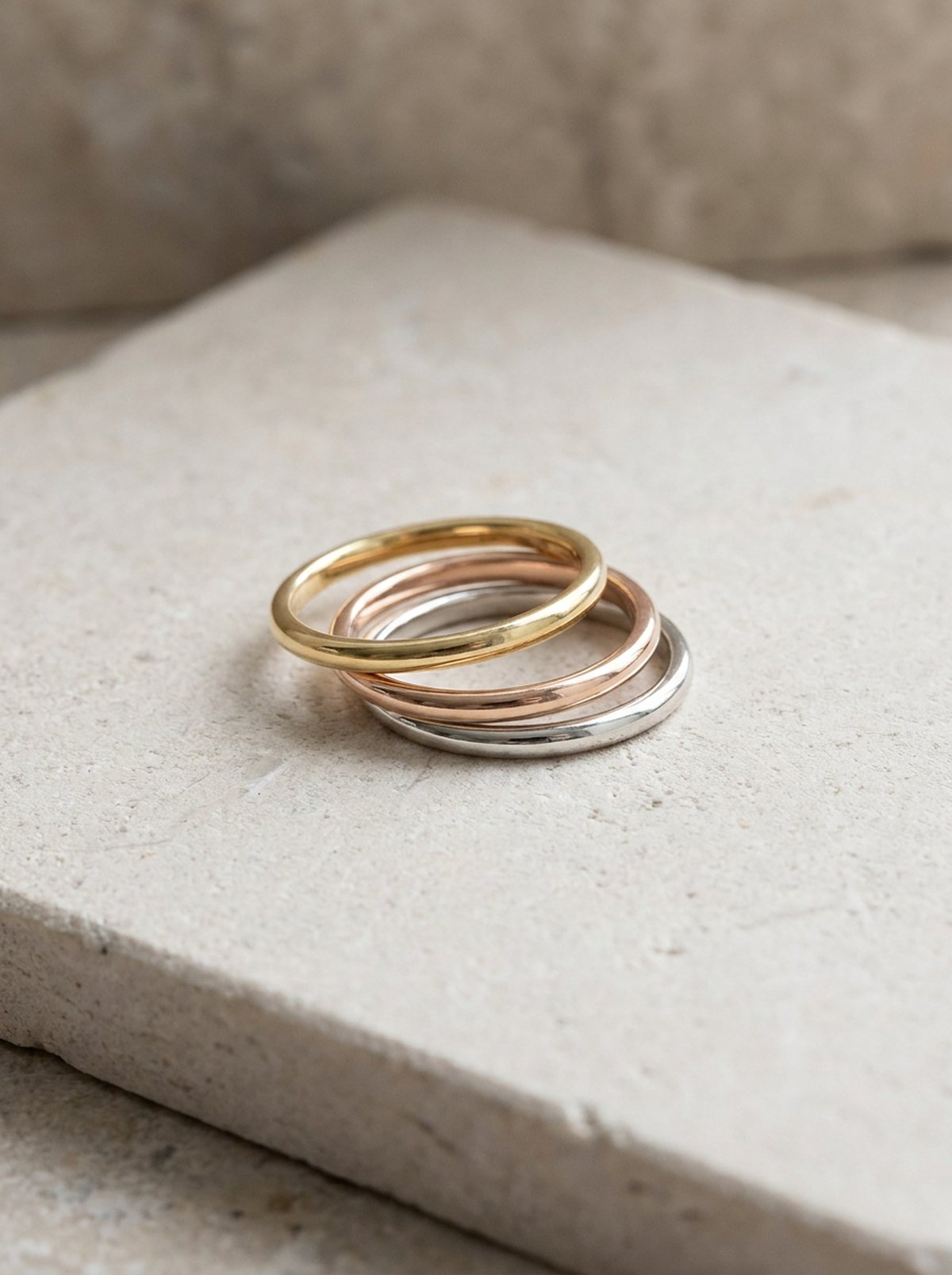
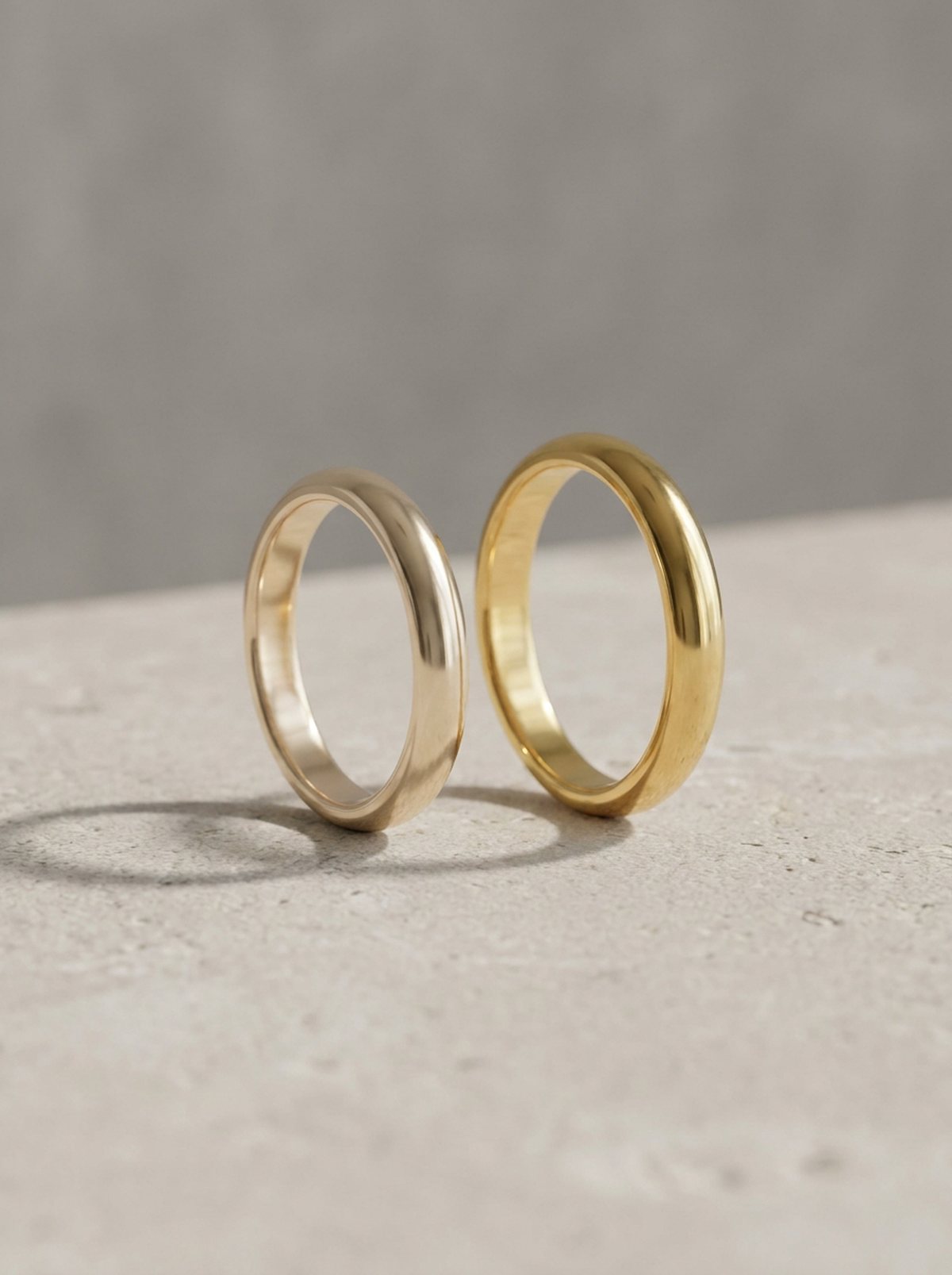
More gold gives a deeper, warmer yellow. 18k yellow gold reads as gold from across a room, and 14k yellow is paler. In rose and white gold the difference is smaller, because the copper or the white metals set most of the color.
Hardness and wear
14k gold is usually harder than 18k, because more of it is made of the harder alloying metals. It resists scratches and dents a little better, and claws made in 14k hold their shape longer. 18k shows fine scratches sooner and develops a soft satin surface with wear, which some people prefer.
Weight
Gold is dense, so more gold makes a heavier piece. The same ring weighs roughly 15 to 20 percent more in 18k than in 14k, and you can feel it in a wide band.
Price
An 18k piece costs more for two reasons: each gram contains more gold, and the piece weighs more grams. Our sapphire solitaire shows the second reason: the same model weighs about 2.5 g in 14k and 2.9 g in 18k.
Which to choose
Choose 14k for a ring you wear every day and want to keep crisp, and for white gold, where the karat changes the look least. Choose 18k for the deeper yellow and the heavier feel, or for earrings and pendants that see little wear. If nickel irritates your skin, ask for palladium white gold at either karat.
Filed under Metals · May 20, 2026