Cleaning colored stones at home
Lukewarm water, mild soap and a soft brush clean most pieces safely. A few stones need gentler handling.
Key points
- Soak in lukewarm soapy water, brush behind the stone with a soft toothbrush, then rinse and dry.
- Ultrasonic cleaners and steam can harm emerald, tanzanite, opal and rubies filled with glass.
- Take rings off before swimming or cleaning, because chlorine can weaken gold claws over time.
In this article
A stone loses its brightness when its underside is coated with lotion, soap and skin oil. Light that should reflect back up through the top leaks out instead. Cleaning takes about twenty minutes, most of it waiting.
Soak
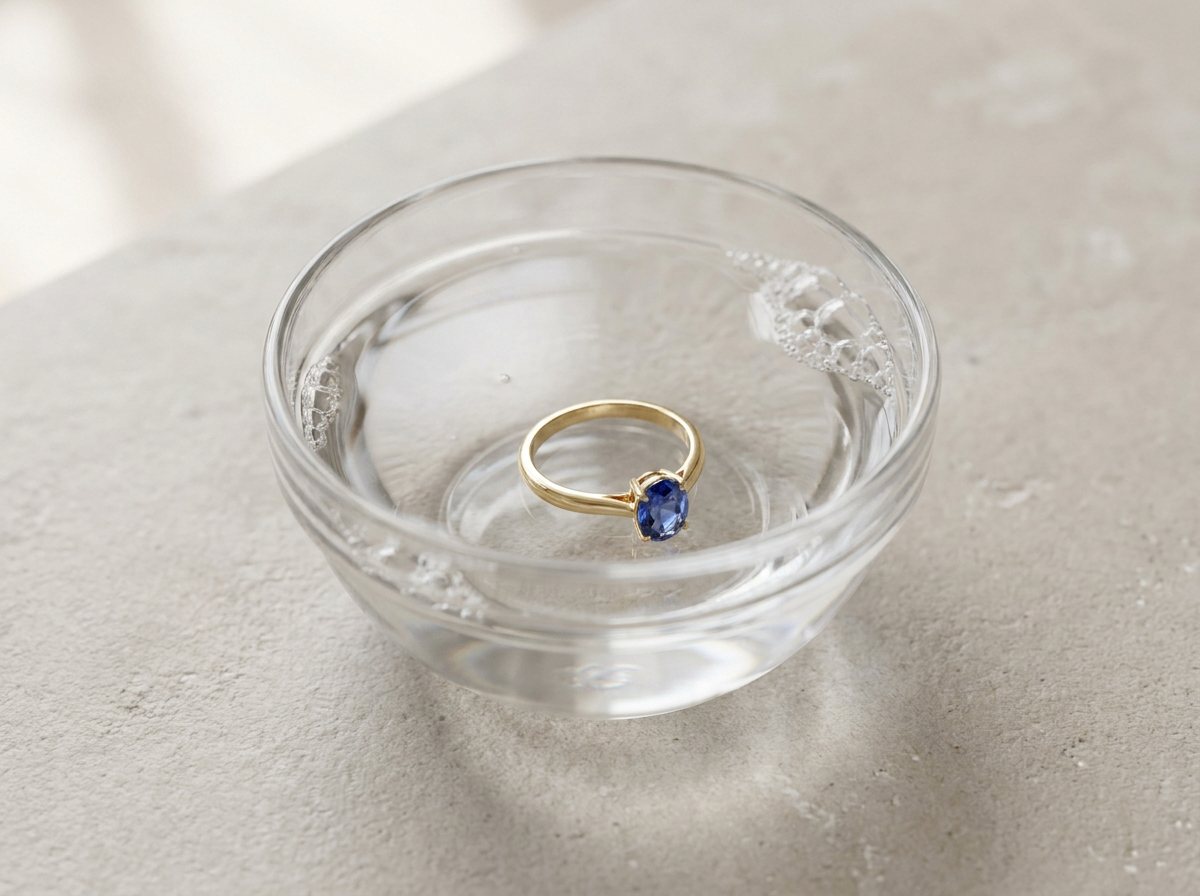
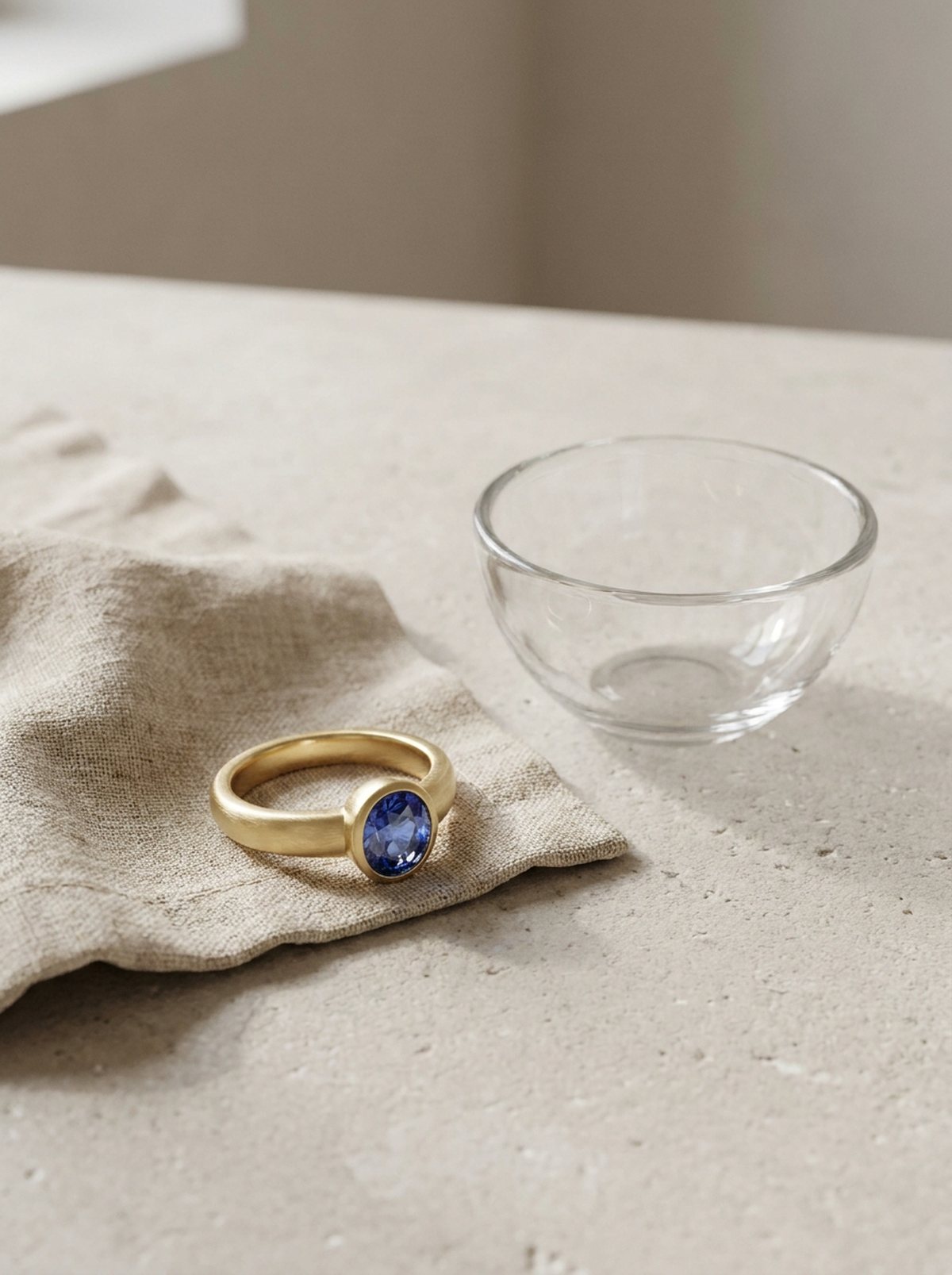
Fill a small bowl with lukewarm water and a few drops of mild dish soap, and leave the piece in it for 10 to 20 minutes to soften the film. Keep the water lukewarm rather than hot. Some stones, emerald and tanzanite among them, can crack from a sudden change in temperature.
Brush
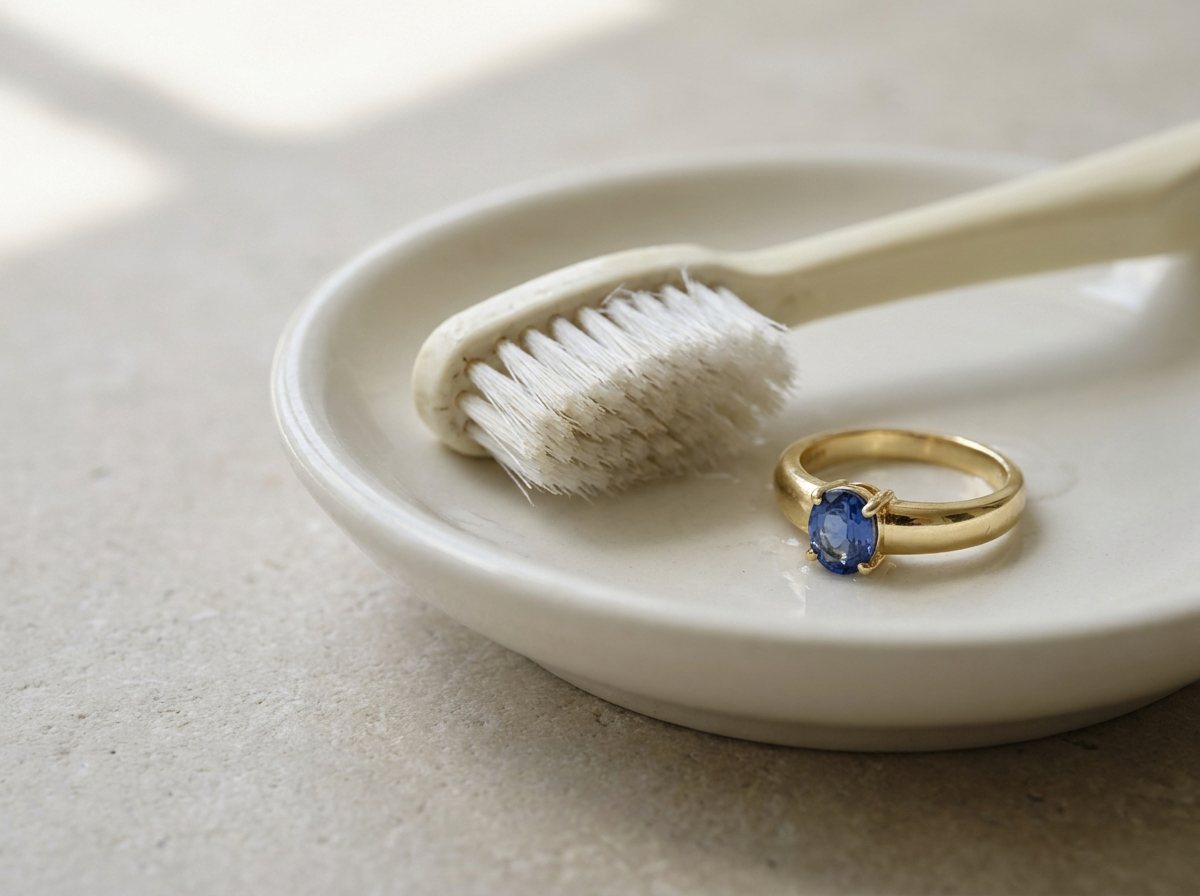
Brush gently with a soft toothbrush, mostly on the back of the stone and between the claws, where film builds up. Keep a brush just for this. Toothpaste is abrasive and scratches gold.
Rinse
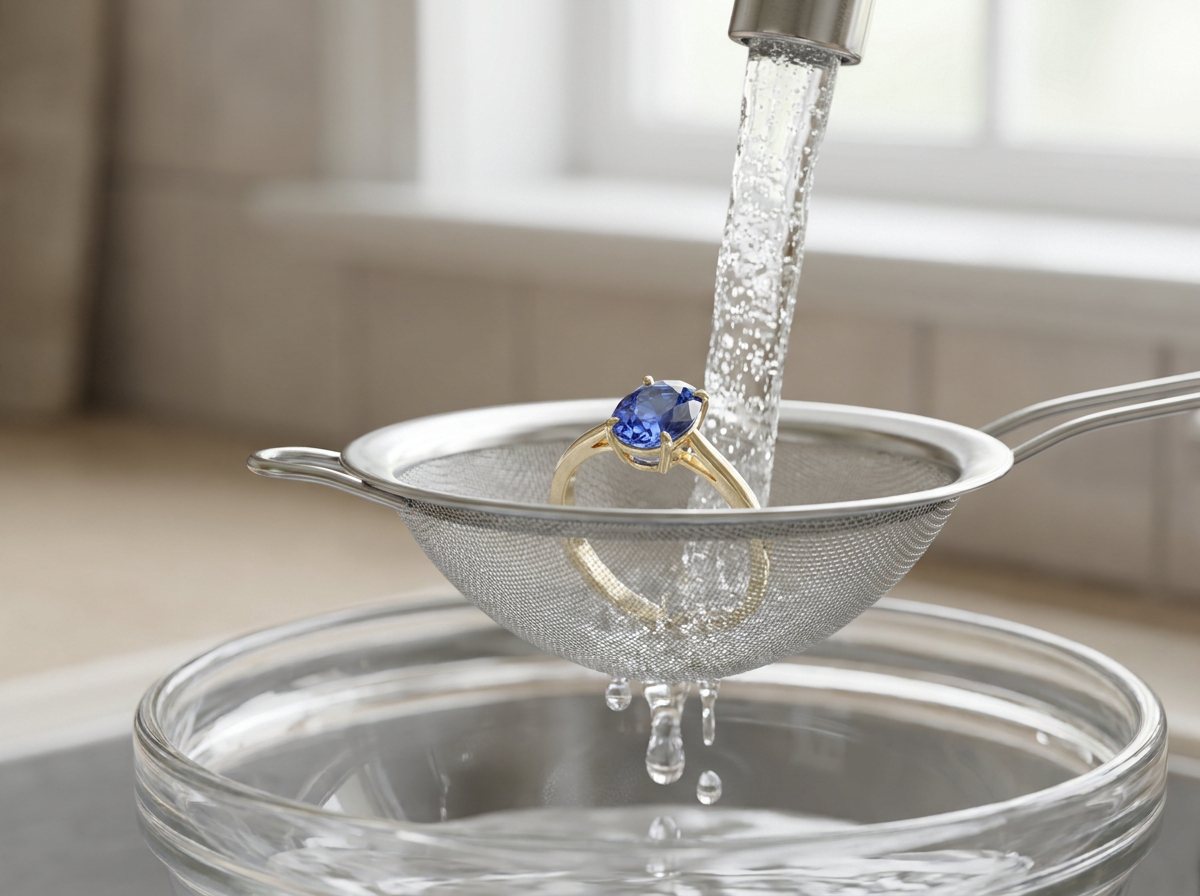
Rinse in clean lukewarm water, over a bowl or a strainer, or with the sink plugged.
Dry
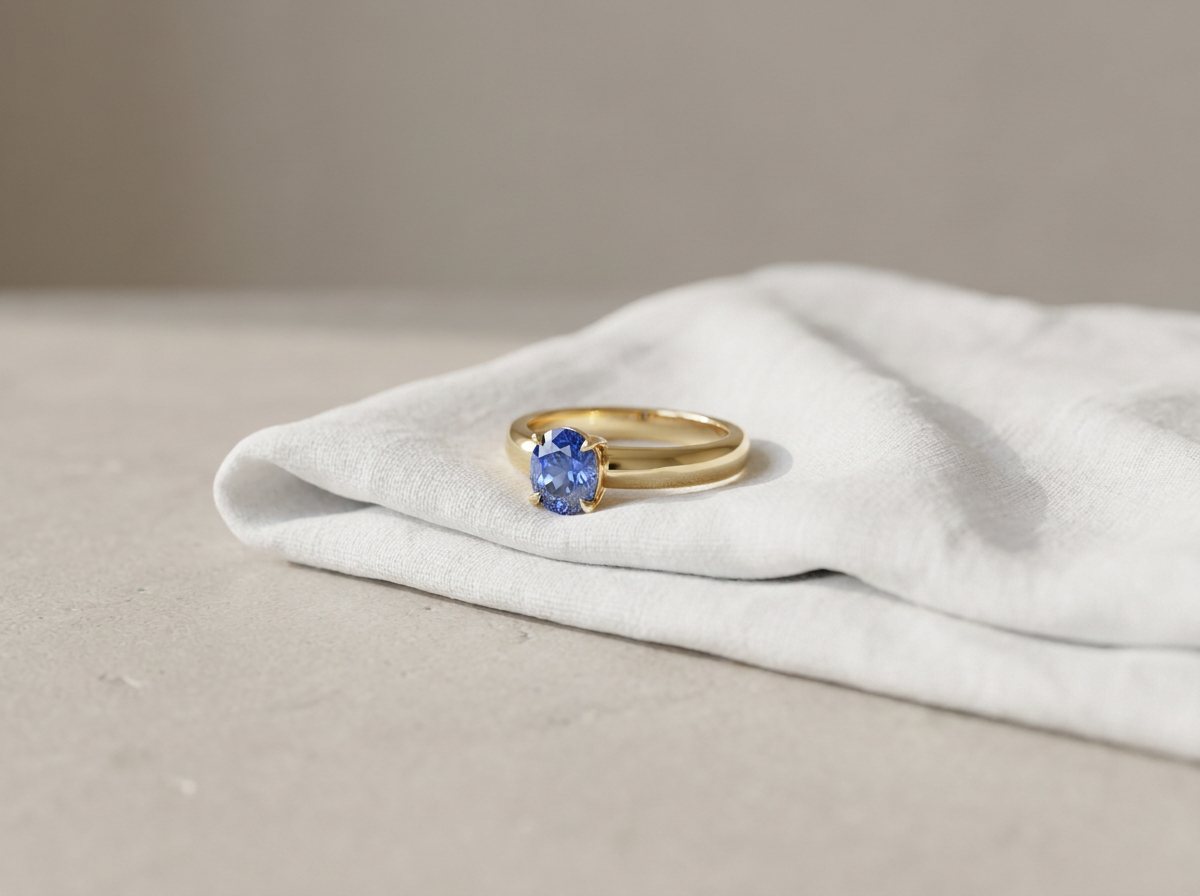
Pat the piece dry with a soft, lint-free cloth. Paper towels can leave fibers caught in the claws.
What to avoid
Ultrasonic cleaners and steam are usually safe for untreated ruby, sapphire and diamond. They can draw the oil out of emeralds, crack tanzanite and opal, and damage rubies filled with glass. If you don't know whether a stone is treated, clean it by hand.
Chlorine bleach and pool or hot tub water attack the metals mixed into gold and can weaken claws over time. Take rings off before swimming or cleaning the house.
If a claw feels rough or a stone moves when you press it gently, stop and have it checked before cleaning it again.
Filed under Care and buying · August 22, 2026