Reading a gem report
What a lab report on a colored stone tells you, what it doesn't, and when it is worth paying for one.
Key points
- A report identifies the stone, states its treatments and sometimes gives the lab's opinion of origin.
- Most colored stone reports do not grade quality or put a value on the stone.
- A report is worth it when a treatment or origin claim moves the price of a natural stone.
In this article
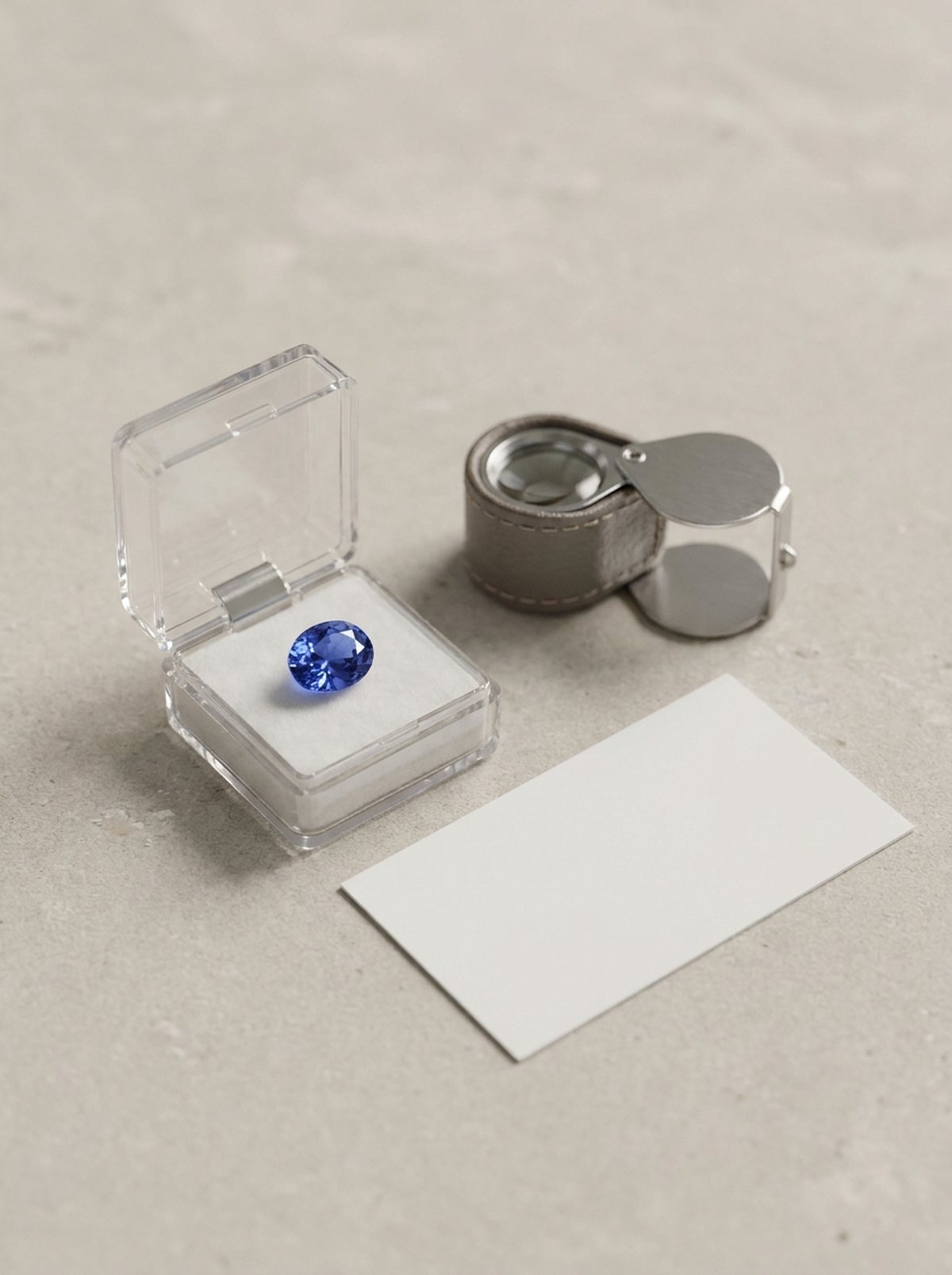
A gem report is a lab's written opinion of what a stone is and what has been done to it. For colored stones, the best-known labs include GIA, AGL, SSEF, Gübelin and GRS. The layouts differ, but most reports cover the same ground.
What a report states
- Identification: the species and variety, such as "natural corundum, variety ruby", or a statement that the stone is synthetic. This is the most important line.
- Weight and measurements: the weight in carats, usually to two decimal places, and the length, width and depth in millimeters. These let you match the report to the stone in front of you.
- Shape and cut, for example "oval, modified brilliant".
- Color: a description such as "purplish red". Some labs add trade terms such as "pigeon's blood" or "royal blue" for stones that meet their own criteria.
- Treatment: for ruby and sapphire, whether the stone has been heated, and any other treatment such as glass filling or beryllium diffusion; for emerald, the type and amount of clarity enhancement, such as "minor oil".
- Origin: on some reports, the lab's opinion of the country the stone came from.
What a report does not do
Most colored stone reports do not grade quality. GIA, for example, identifies a ruby and states its treatment but gives it no color or clarity grade the way it would a diamond. A report does not put a value on the stone either.
Origin is an opinion based on the stone's inclusions and chemistry. Labs sometimes disagree, and for some stones they cannot give an origin at all, so a second report on an expensive stone is common.
Checking a report
Most labs let you look up a report on their website by its number. Check that the weight and measurements match the stone you are buying. A genuine report for a different stone of the same shape is an old trick.
When it is worth paying for
A report costs from under a hundred dollars to more than two thousand, depending on the lab, the tests and the weight of the stone. It is worth it for a natural stone where a treatment or origin claim moves the price: an unheated sapphire, a ruby sold as Burmese, an emerald sold as untreated, or a padparadscha. For lab-grown stones and inexpensive natural stones, a report can cost more than it protects.
Filed under Care and buying · October 5, 2026