Lost-wax casting, start to finish
How a ring goes from a model on a screen to solid gold, and why the wax never comes back.
Key points
- Each ring starts as a model printed in castable resin or carved in wax by hand.
- Plaster sets around the model, and a kiln burns the wax out to leave a hollow.
- Gold poured into the hollow comes out as one solid casting with no seams in the band.
Most gold rings are cast, and most castings use a method that is thousands of years old. You make the piece in wax, bury the wax in plaster, melt the wax out, and pour metal into the hole it leaves. The wax is lost, which is where the name comes from.
The model
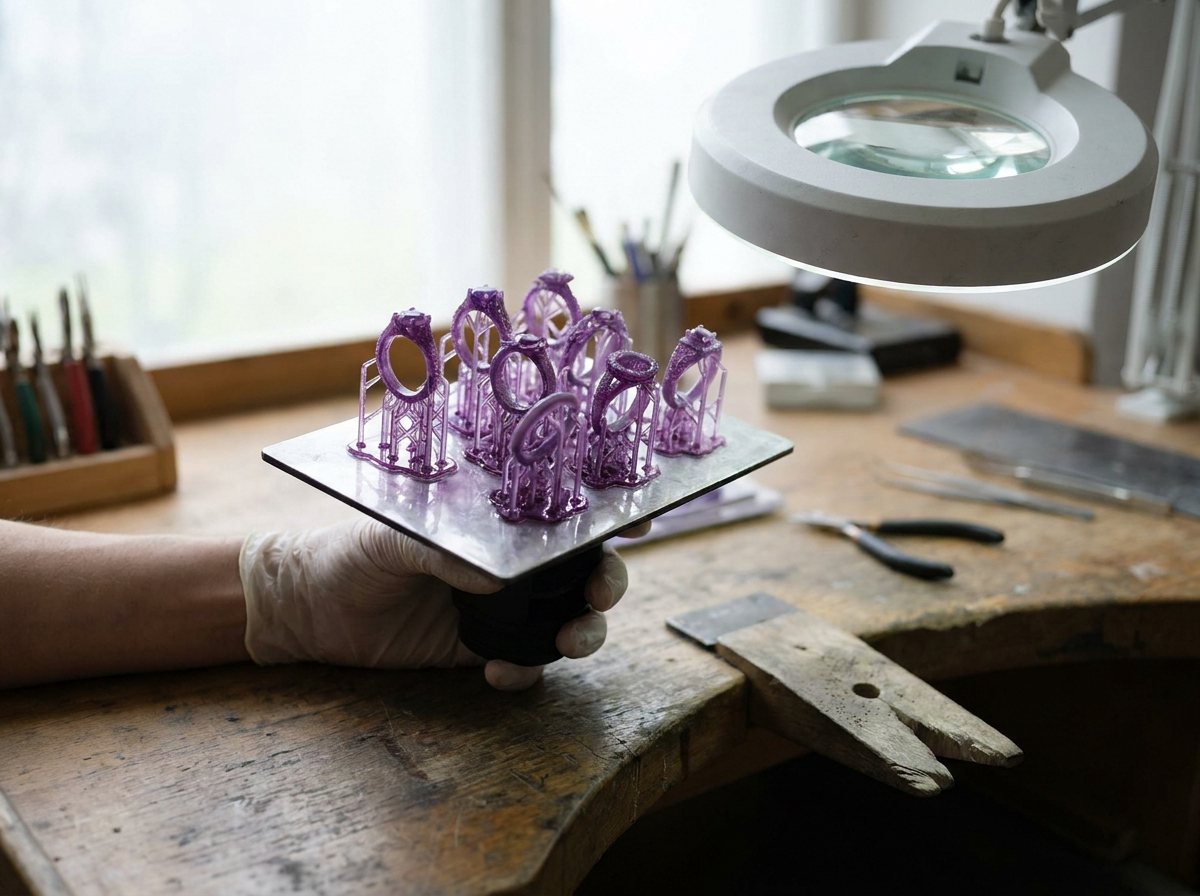
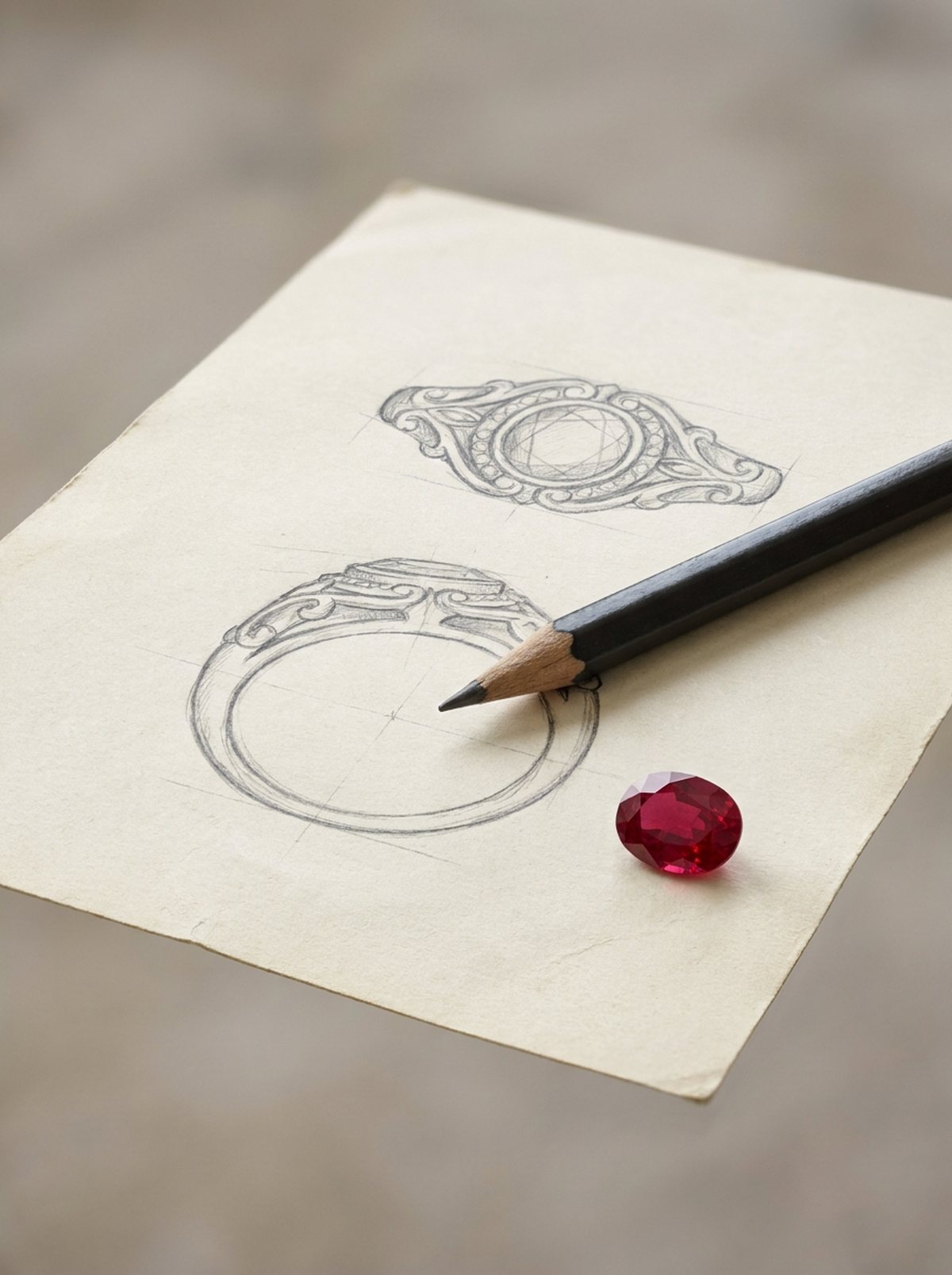
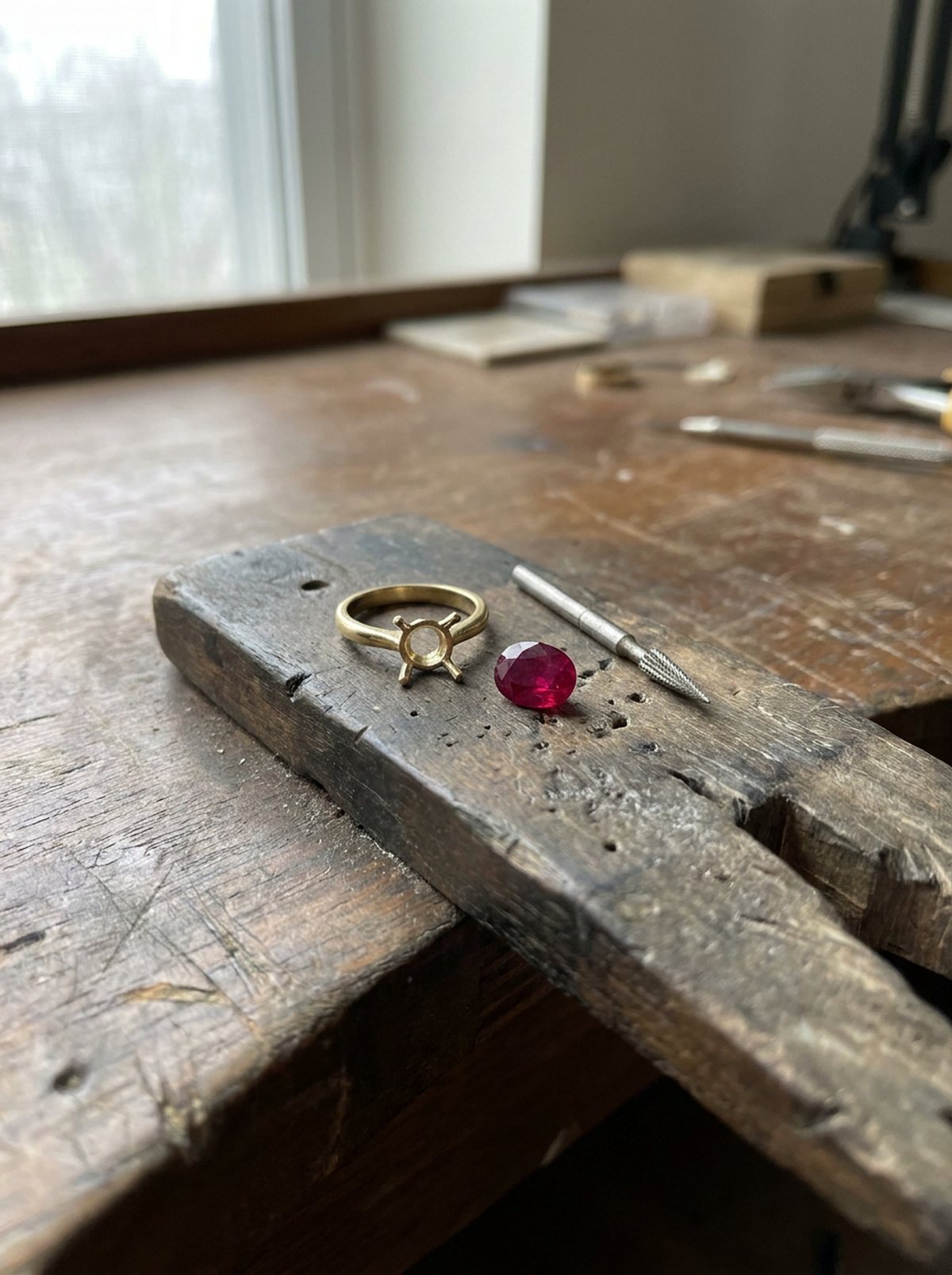
A ring starts as a 3D model. For a stone setting, the model is built around the stone's measurements: its length, width and depth, how high it should sit, and where the claws should land. A 9 × 7 mm oval needs a seat cut for a 9 × 7 mm oval.
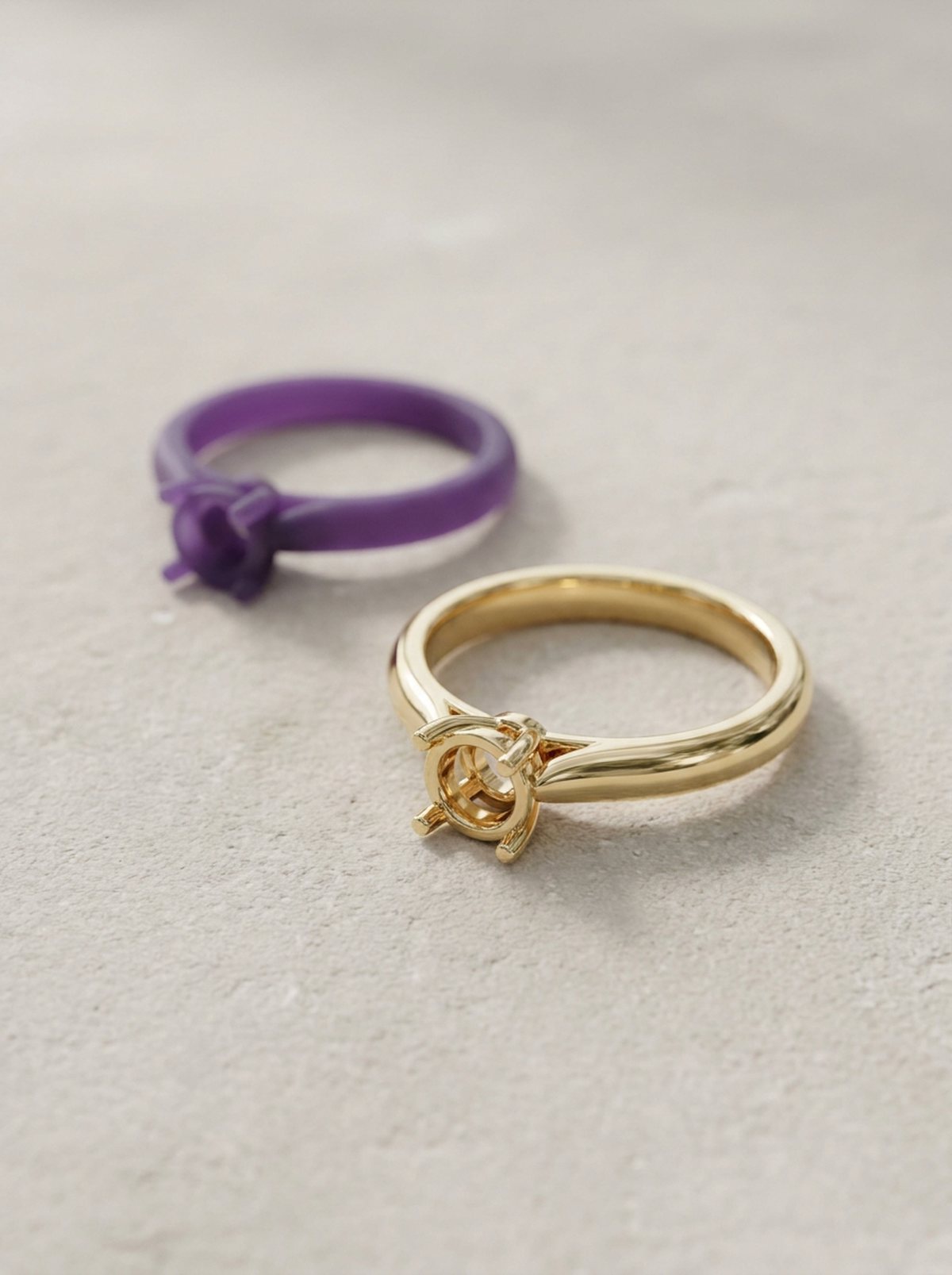
The model is printed in castable resin, a wax-like material that burns away cleanly. Resin printers can hold details smaller than a tenth of a millimeter, fine enough for claw tips and engraved lines. Some pieces are still carved from wax by hand, the way they were before printers.
The tree
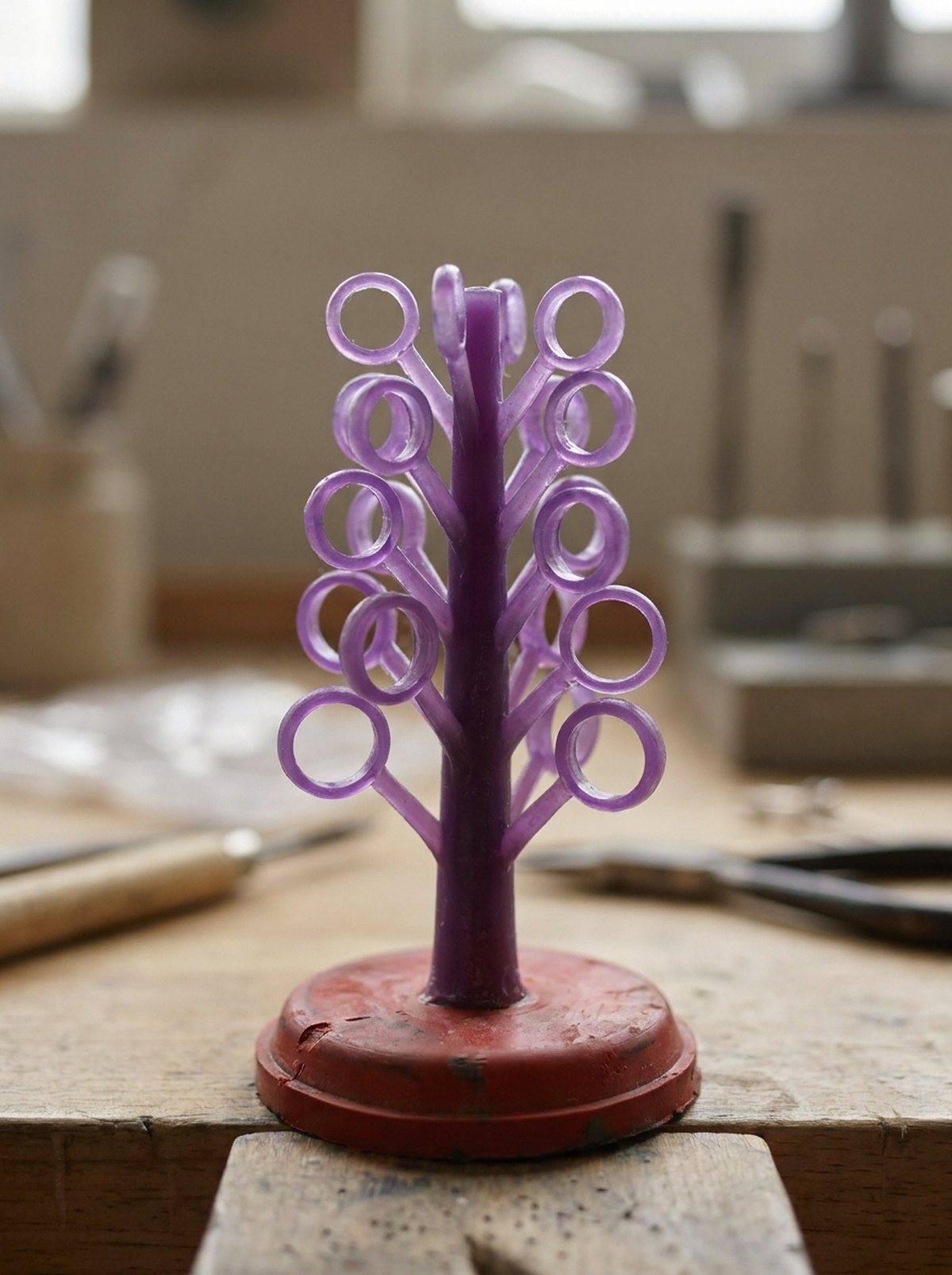
Each wax ring is attached by a short stem, called a sprue, to a central wax trunk. Several rings can share one trunk. The finished arrangement looks like a small tree, and it stands on a rubber base.
The flask
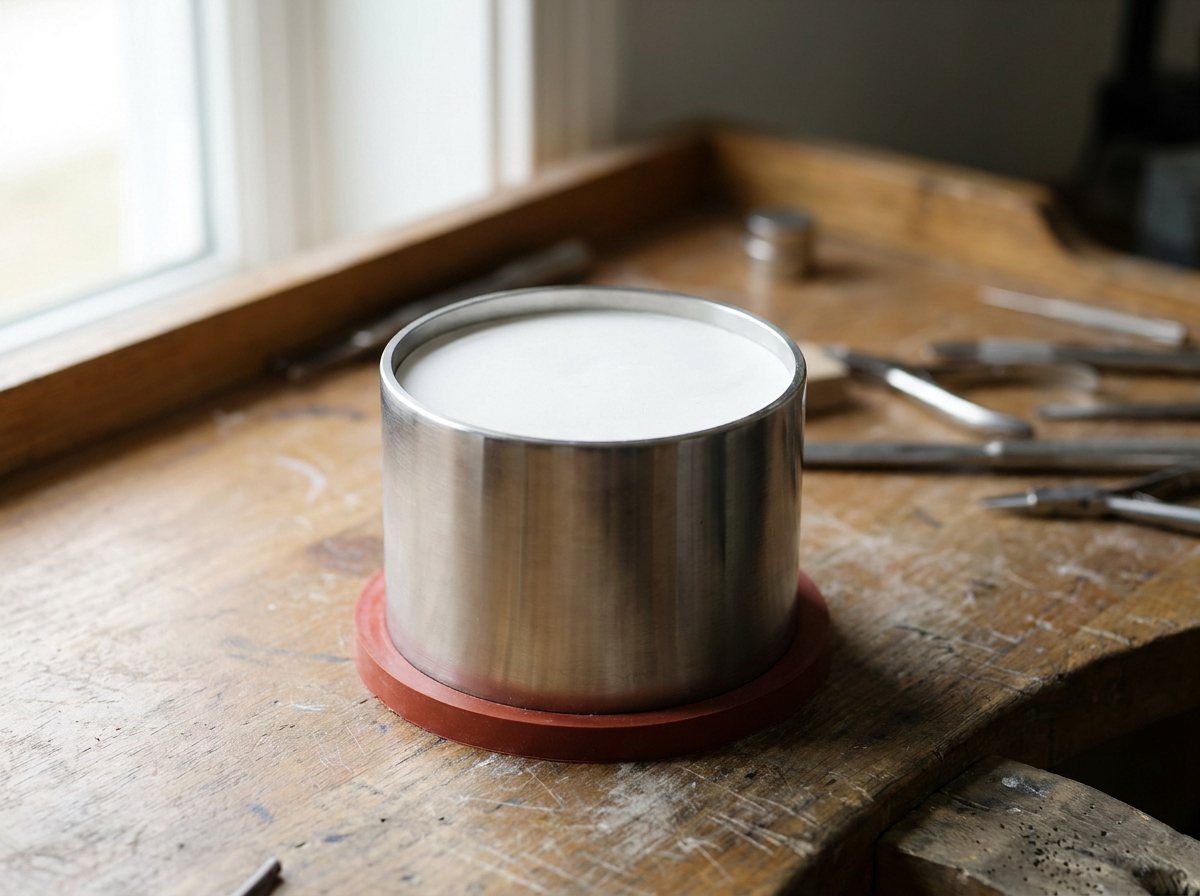
A steel cylinder, the flask, goes over the tree. It is filled with investment, a fine plaster made to survive high heat. The flask sits in a vacuum for a minute or two to pull out air bubbles, which would otherwise turn into small blobs of metal on the ring. Then the plaster sets hard around the wax.
Burnout
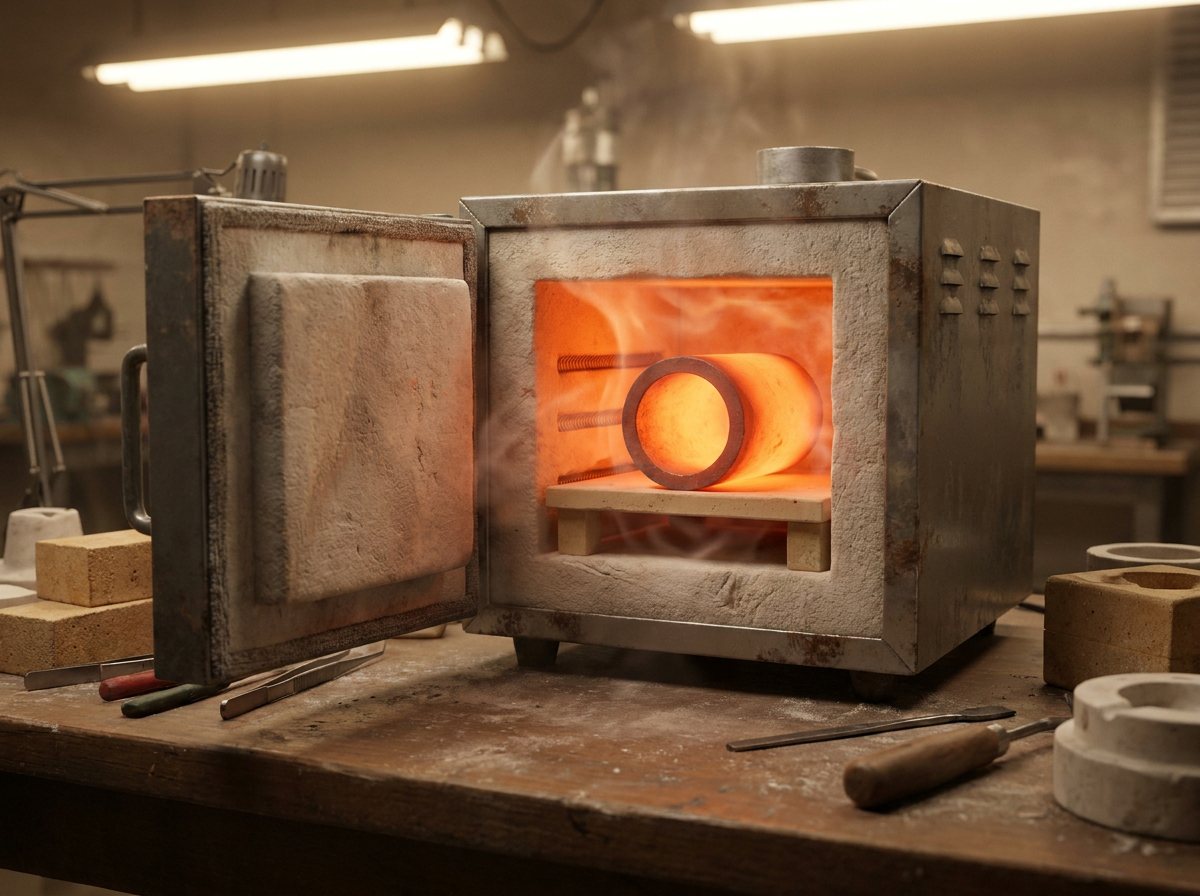
The flask goes into a kiln for several hours. The heat rises in steps to around 700 °C. The wax melts and burns away, and the plaster cures. What is left is a hollow, ring-shaped space connected to a funnel at the top.
Pouring
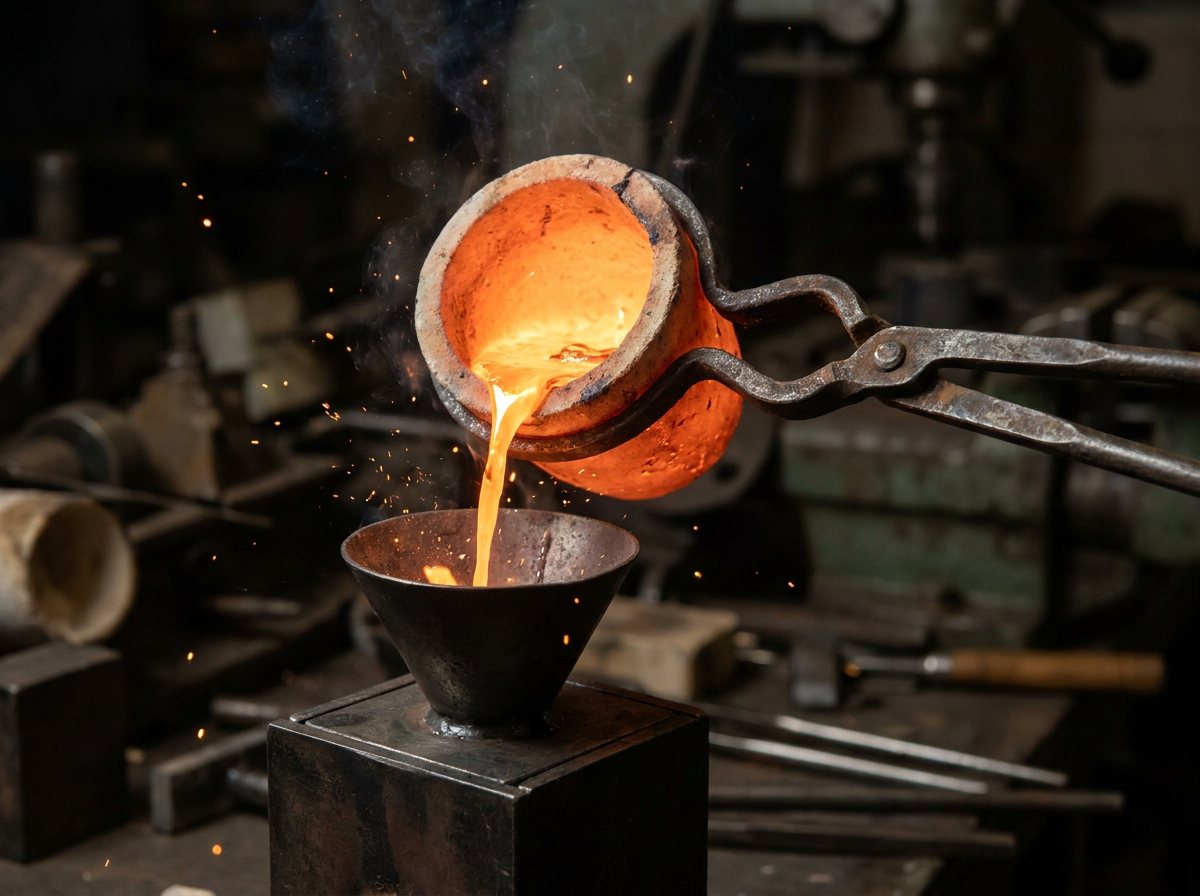
Gold is melted in a crucible. 14k gold is an alloy, and different alloys melt at different temperatures, so the caster pours at a temperature set for that alloy. A vacuum below the flask, or a spinning arm, pulls the gold into every corner of the hollow before it cools.
Breaking out
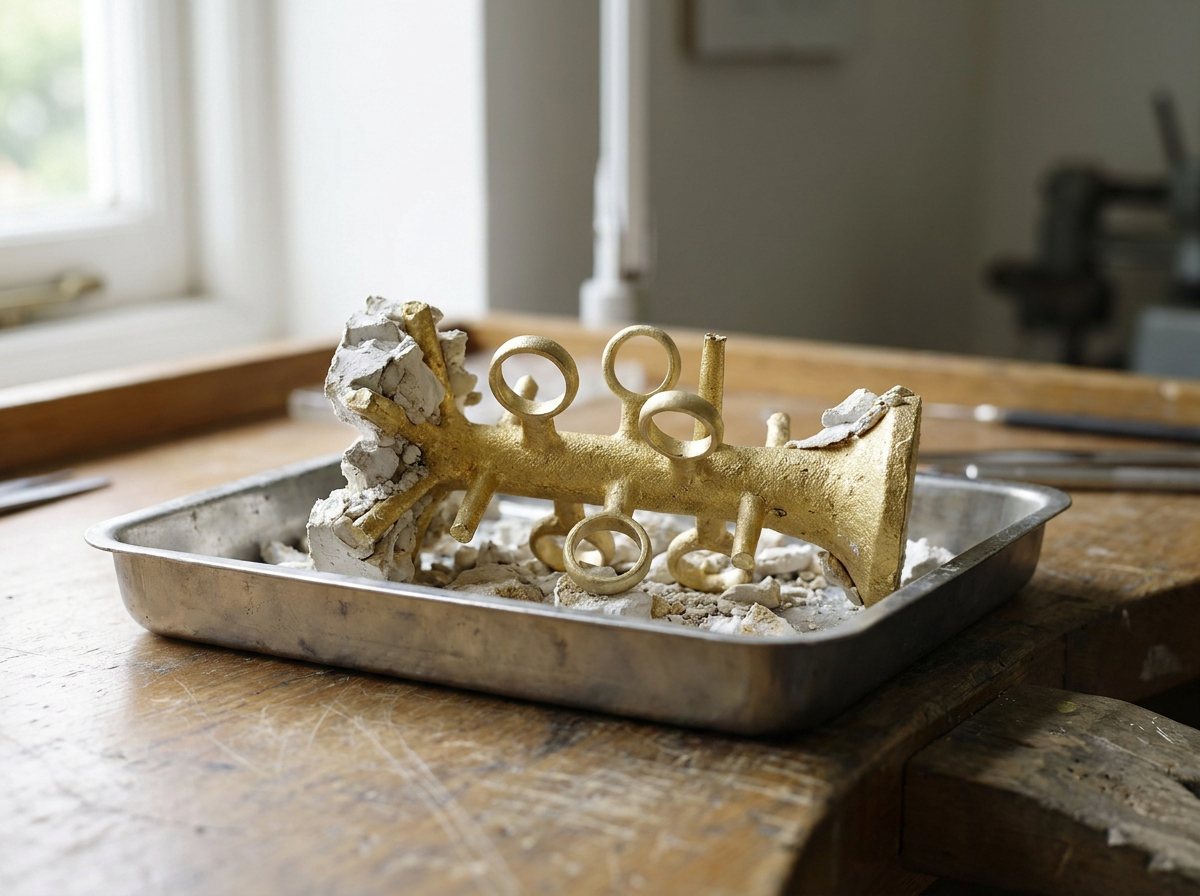
The hot flask goes into water. The plaster cracks and falls away, and a tree of rough gold rings comes out: dull, grainy, still joined at the sprues.
Finishing
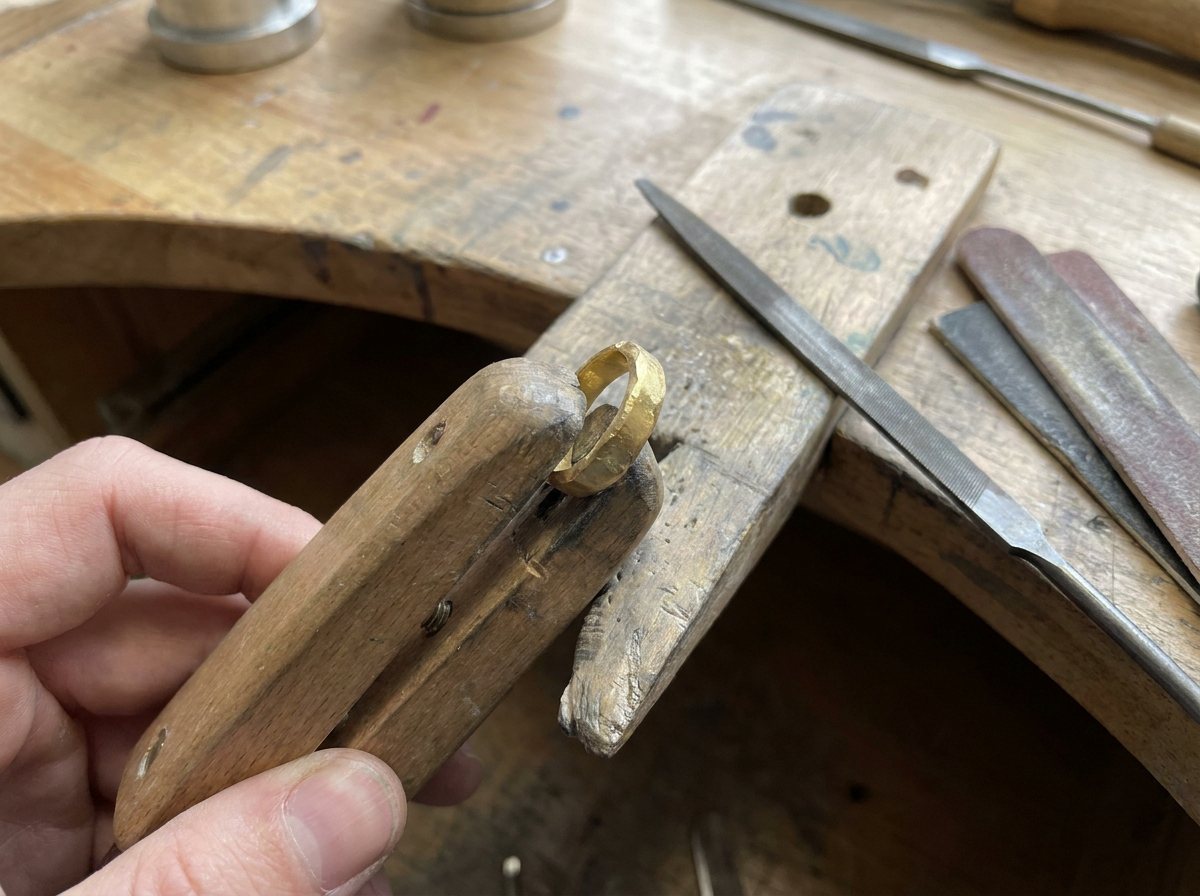
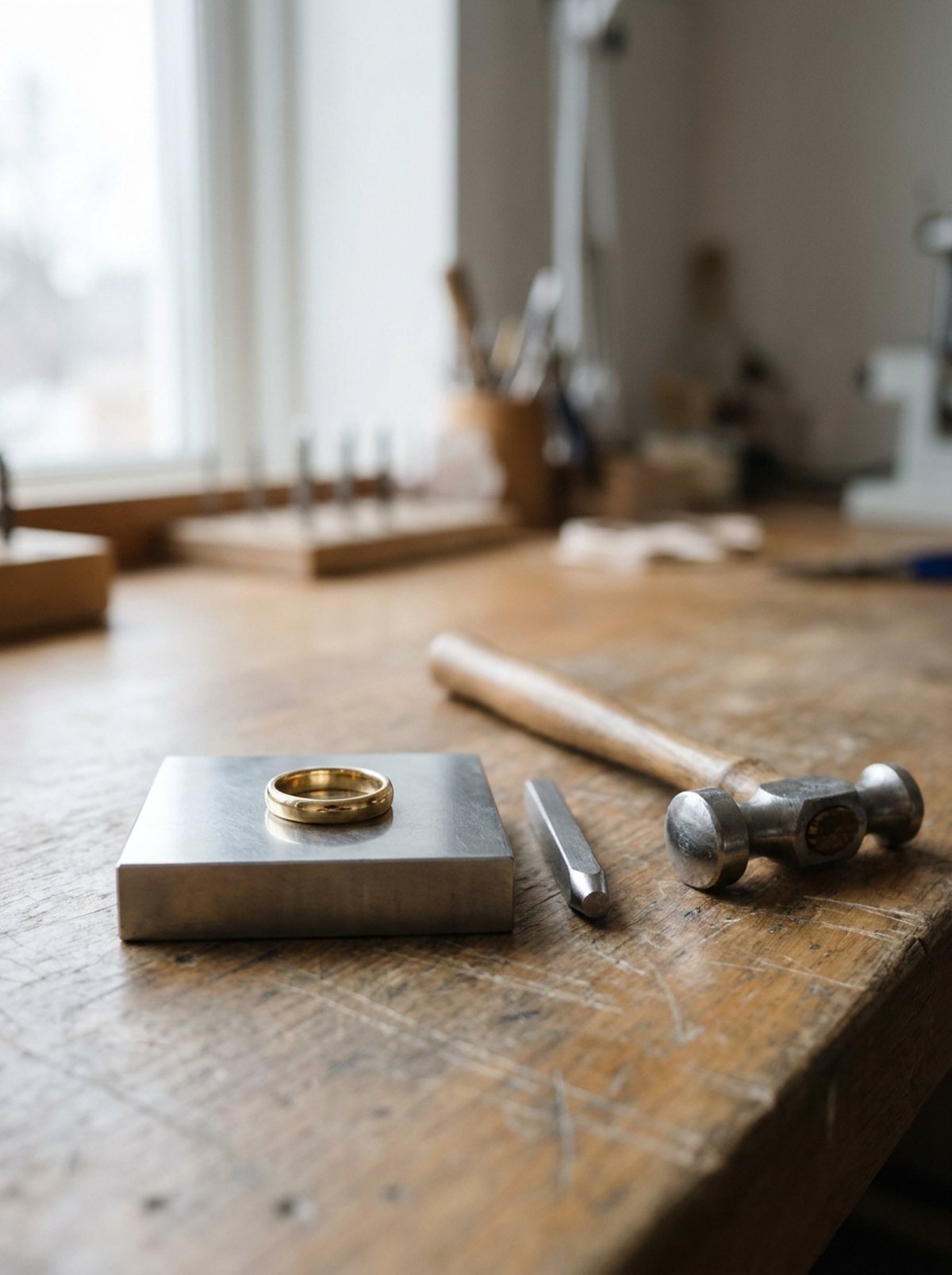
Each ring is cut from the trunk. The sprue mark is filed away, and the ring is filed, sanded and polished through finer and finer grits. The stone is set after the pre-polish, so the claws can be shaped around it. A final polish follows.
Each piece ends up as a single solid casting, with no seams or soldered joins in the band.
Filed under Making · June 6, 2026