Padparadscha: a sapphire named after a lotus
A pink-orange sapphire with a Sinhalese name and a long argument about where it begins and ends.
Key points
- Padparadscha is sapphire that shows pink and orange at once, in soft pastel tones.
- The name carries a large premium, so expect a lab report that calls the stone padparadscha.
- Labs will not call beryllium-treated stones padparadscha, and simply heated stones qualify if the heating is disclosed.
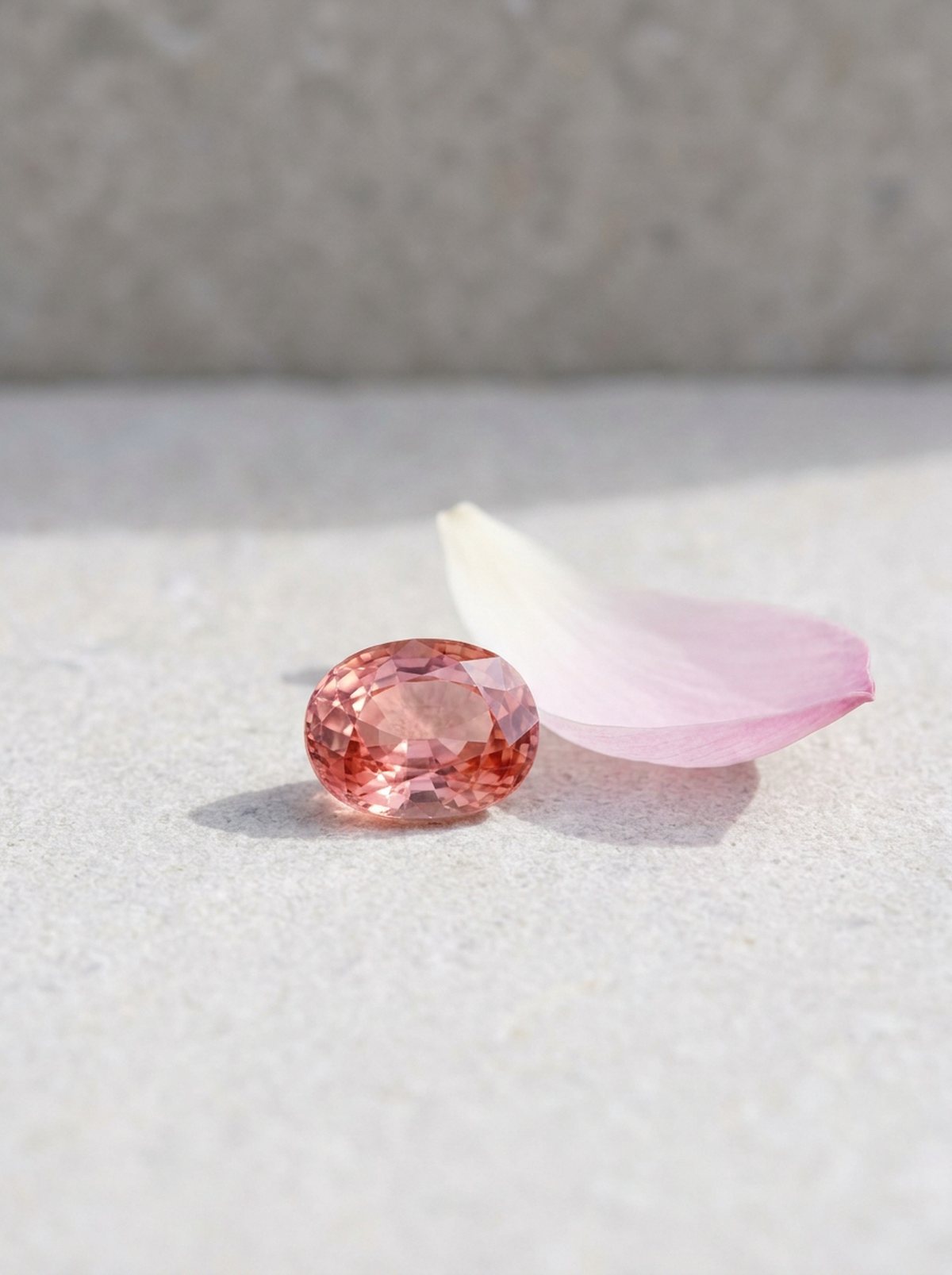
Padparadscha is the name for sapphire that is pink and orange at the same time. The word comes from Sinhalese, the main language of Sri Lanka, and refers to the color of the lotus flower. Sri Lanka was the traditional source and the name is still most closely tied to Sri Lankan stones, but sapphires from Madagascar and Tanzania can qualify too.
Where pink and orange meet
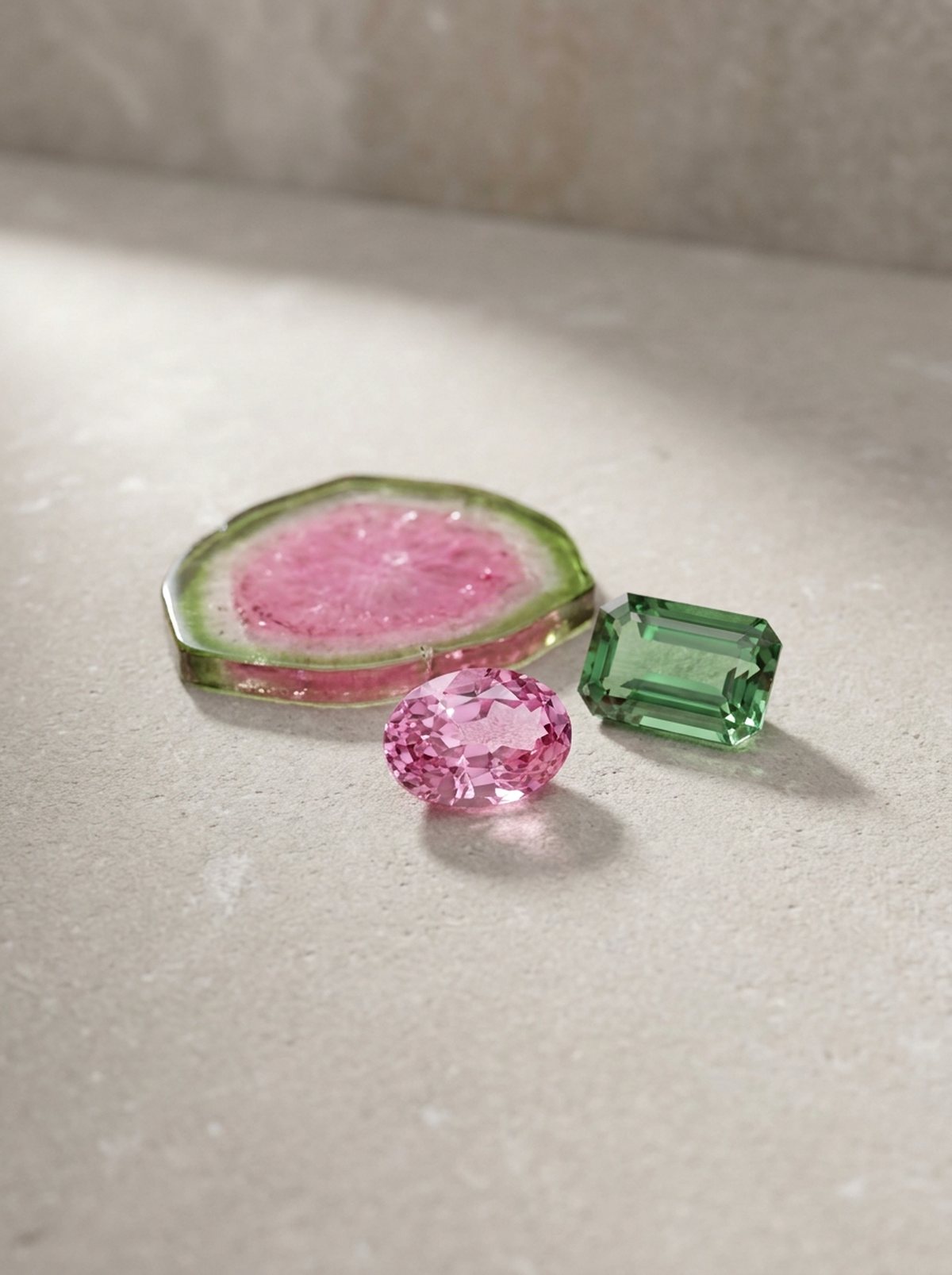
The major gem labs share one written definition, but dealers and some labs still draw its edges differently. A sapphire that is mostly pink is a pink sapphire, and one that is mostly orange is an orange sapphire. Padparadscha sits in the narrow band between them, with both colors visible, in soft pastel tones and low to medium saturation. Two labs can still describe the same stone differently.
Because the name adds a large premium, a stone sold as padparadscha should come with a report from a lab that uses the term.
Beryllium
In the early 2000s, large numbers of orange and pink-orange sapphires reached the market from Thailand after being heated with beryllium, which drives orange color into the stone. At first they passed as stones that had only been heated in the usual way. Labs traced the color to beryllium with chemical analysis in 2002, and the treatment now has to be disclosed.
Labs will not call a beryllium-treated stone padparadscha, and it sells for far less. A stone that was only heated can still be called padparadscha if the heating is disclosed.
Fading color
Some pink-orange sapphires owe part of their color to an unstable effect that fades after hours of exposure to bright light and can come back after exposure to ultraviolet light. Labs that test for it expose the stone to light before describing its color, so the color on the report is the color that lasts.
Peach sapphire
When a pinkish-orange sapphire has no lab report that calls it padparadscha, we describe it as a peach sapphire. Lab-grown sapphire in padparadscha colors also exists, and it costs a small fraction of the natural stone.
Filed under Stones · August 5, 2026