Silk, needles and gardens
What the inclusions inside colored stones are, which ones lower the price, and which ones show a stone is natural.
Key points
- Inclusions record how a stone formed and help gemologists tell natural stones from lab-grown ones.
- Intact silk in ruby or sapphire shows the stone was not heated to high temperatures.
- Inclusions lower value most when they weaken the stone or sit right under the table.
In this article
An inclusion is any feature inside a stone: a crystal of another mineral, a pocket of liquid or gas, a fracture, or a band of uneven color. Most form while the stone grows; fractures usually form later. Almost every natural colored stone has some. Under a microscope they record how the stone formed, and they are how gemologists tell natural stones from lab-grown ones and, sometimes, one source from another.
Silk
Fine needles of the mineral rutile often grow inside ruby and sapphire, crossing each other at 60 degrees. Dealers call them silk.
A little silk spreads light softly through the stone and can give it a velvety look; the finest sapphires from Kashmir are prized for that. Dense silk makes a stone look milky. When silk is dense and evenly aligned, a stone cut as a dome shows a six-rayed star, which is how star sapphires and star rubies form.
High heat dissolves silk, so intact silk shows that a ruby or sapphire was not heated to high temperatures. It may still have been heated gently.
Gardens
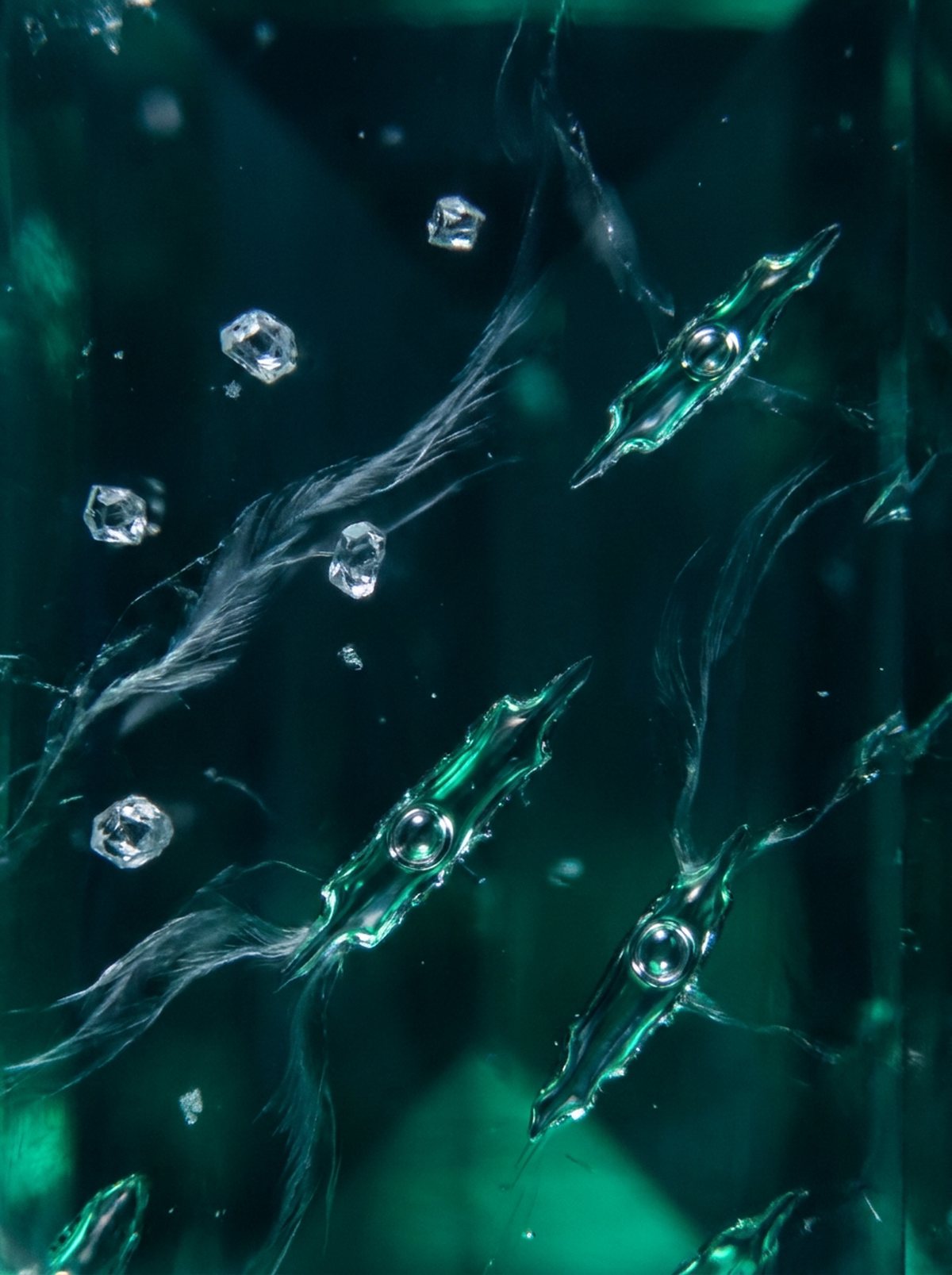
Emeralds are known for jardin, French for garden: fractures, crystals and wisps that look like foliage. Colombian emeralds often contain tiny cavities that hold liquid, a gas bubble and a salt crystal at the same time. These three-phase inclusions are typical of Colombian emeralds, though emeralds from Afghanistan, China and Zambia can have them too.
Lily pads and horsetails
Some inclusions have names because they are so distinctive. Peridot often contains flat, round stress fractures around a tiny crystal, called lily pads. Demantoid garnet from Russia can contain golden fibers that fan out like a horsetail, and collectors pay more for them.
How much is too much
The Gemological Institute of America groups colored stones by how included they normally are. Aquamarine and morganite are expected to look clean to the eye. Ruby, sapphire, garnet and spinel usually show some inclusions under magnification and sometimes to the eye. Emerald and red tourmaline are expected to be included. Each stone is judged against its own group, so an emerald with visible inclusions can still be a fine emerald.
Inclusions lower the value most when they weaken the stone, such as a large fracture reaching the surface, or when they sit right under the table, where you see them first.
Filed under Stones · August 31, 2026