Why almost every emerald is oiled
Emeralds grow full of tiny fractures. Filling them is old, routine, and something every seller should tell you about.
Key points
- Cutters fill emerald fractures with oil or resin so they are much harder to see.
- Labs grade the filling as minor, moderate or significant, and unfilled emeralds are rare and cost more.
- Heat, steam, solvents and ultrasonic cleaners can draw oil out, so clean emeralds with lukewarm soapy water.
In this article
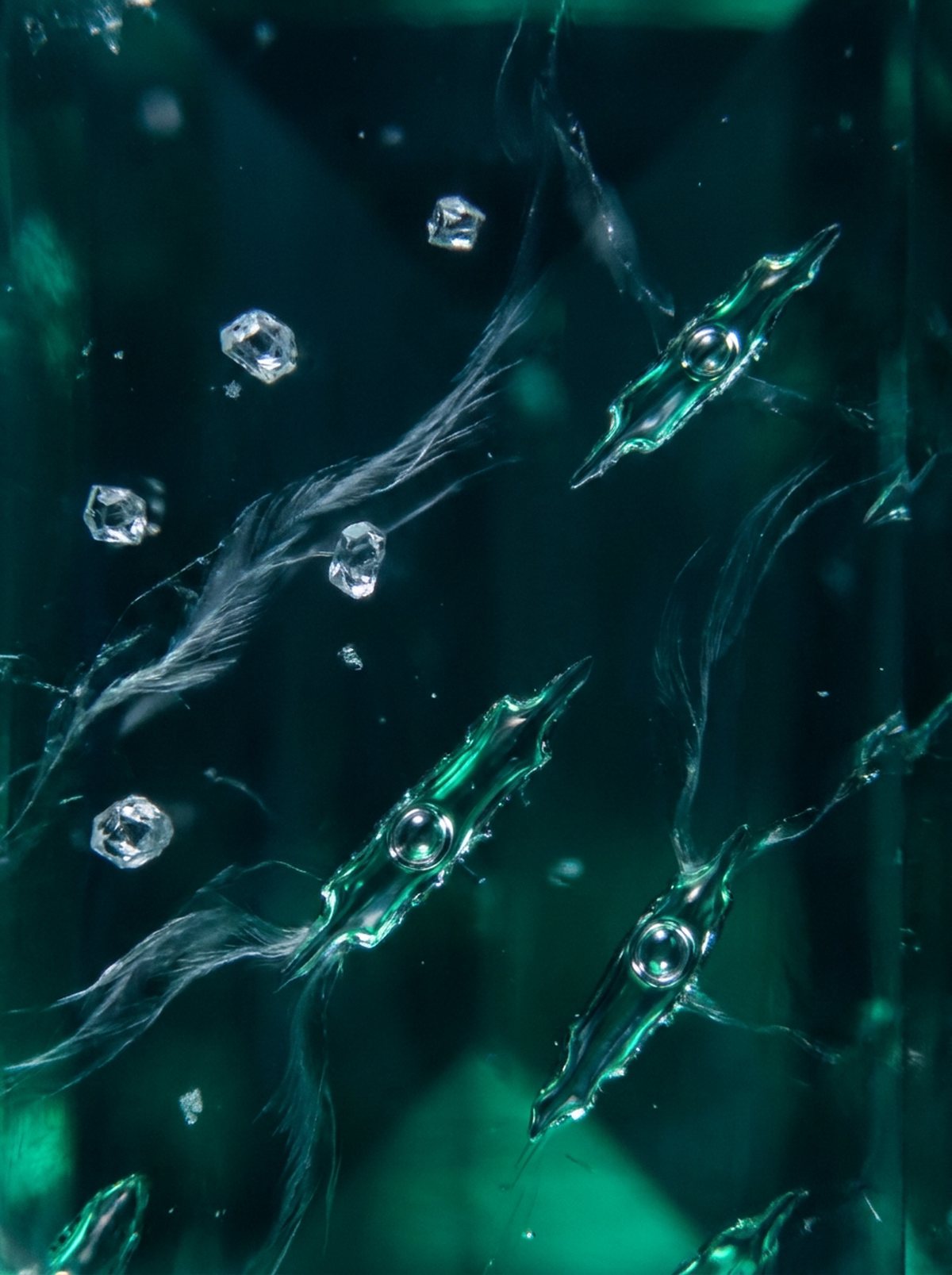
Emerald is a green variety of the mineral beryl, colored by chromium and sometimes vanadium. It grows in conditions that leave almost every crystal full of small fractures and inclusions. Gem dealers call the effect jardin, French for garden, because under magnification the inside of an emerald looks like moss and branches.
Fractures that reach the surface catch the light and show as white or silvery flashes. For centuries, cutters have filled them with oil that bends light almost as much as emerald does, so light passes through the fracture instead of bouncing off it. The fractures are still there, but they are much harder to see.
What goes in
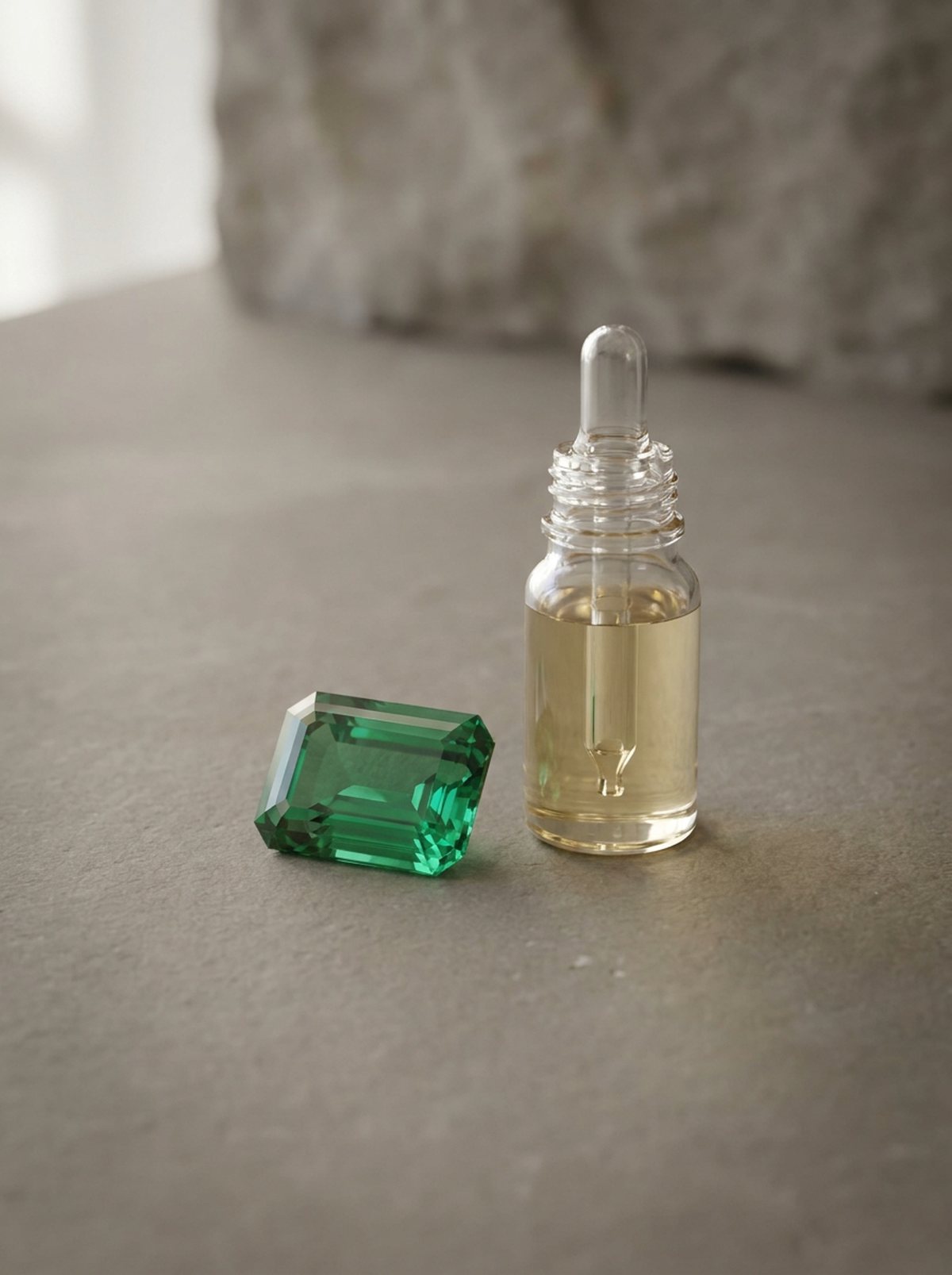
The traditional filler is colorless cedarwood oil. Many emeralds today are filled with synthetic resins instead, some sold under trade names such as Opticon. Resins last longer than oil but are harder to remove. Oil tinted green adds color as well as hiding fractures, and selling a stone treated that way without saying so is not accepted in the trade.
How it is disclosed
Labs grade how much the filling changes the way a stone looks, usually as minor, moderate or significant. In a stone listed as "oiled (minor)", the filler barely changes how it looks. With significant filling, the treatment is doing much of the work, and the stone could look quite different if the filler ever came out. Emeralds with no filling at all are rare and sell at a premium.
When we set a natural emerald, its filling is stated in writing, such as oiled (minor). Lab-grown emeralds have far fewer fractures, so they rarely need filling.
Living with an oiled emerald
Oil is not permanent. Heat, solvents, steam and ultrasonic cleaners can draw it out, and the fractures then show again. Clean an emerald with lukewarm water, a little mild soap and a soft brush, and keep it away from hot water and the ultrasonic tank. If an older emerald starts to look cloudy or shows new white streaks, a jeweler can usually clean it and oil it again.
Emerald is hard, 7.5 to 8 on the Mohs scale, but the same fractures make it chip more easily than its hardness suggests. A bezel or a setting that covers the corners suits a ring. The clipped corners of the emerald cut help for the same reason.
Filed under Stones · May 29, 2026