Hue, tone and saturation
Three words for describing the color of a stone, and why the same stone looks different under different lights.
Key points
- Hue is the basic color, tone is how light or dark, and saturation is how strong.
- For most stones the most valued tones are medium to medium-dark, and higher saturation usually raises the price.
- Warm light flatters rubies and daylight flatters sapphires, so ask for videos in daylight and indoor light.
In this article
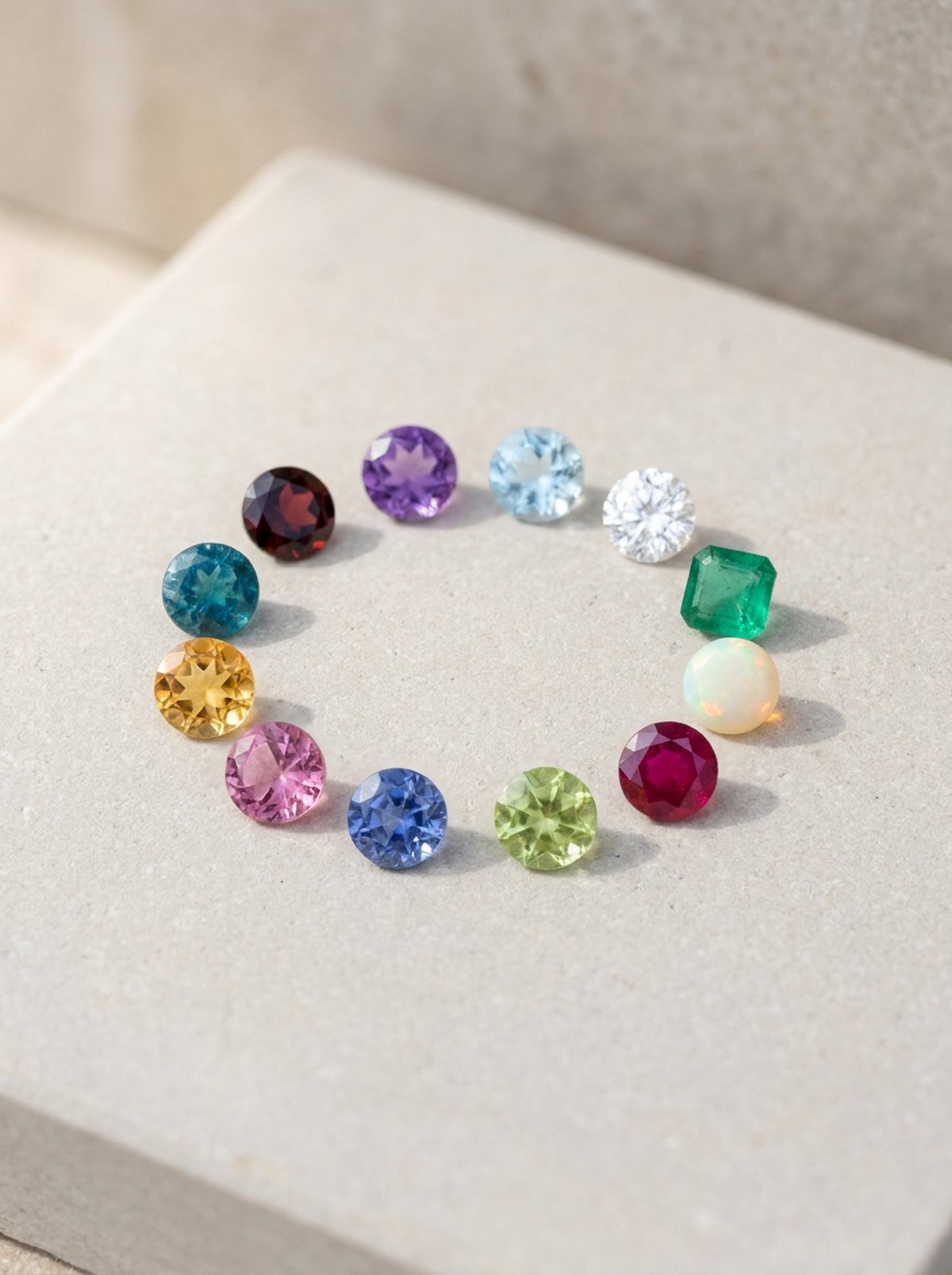
Color sets most of the price of a colored stone. The Gemological Institute of America describes it with three separate measures, and most of the trade uses the same words.
Hue
Hue is the basic color: red, orange, yellow, green, blue, violet or purple. Most stones have a main hue with a secondary one, such as purplish red, orangy red or greenish blue. The most valued rubies are pure red to slightly purplish red; a ruby that leans orange or brown is worth less.
Tone
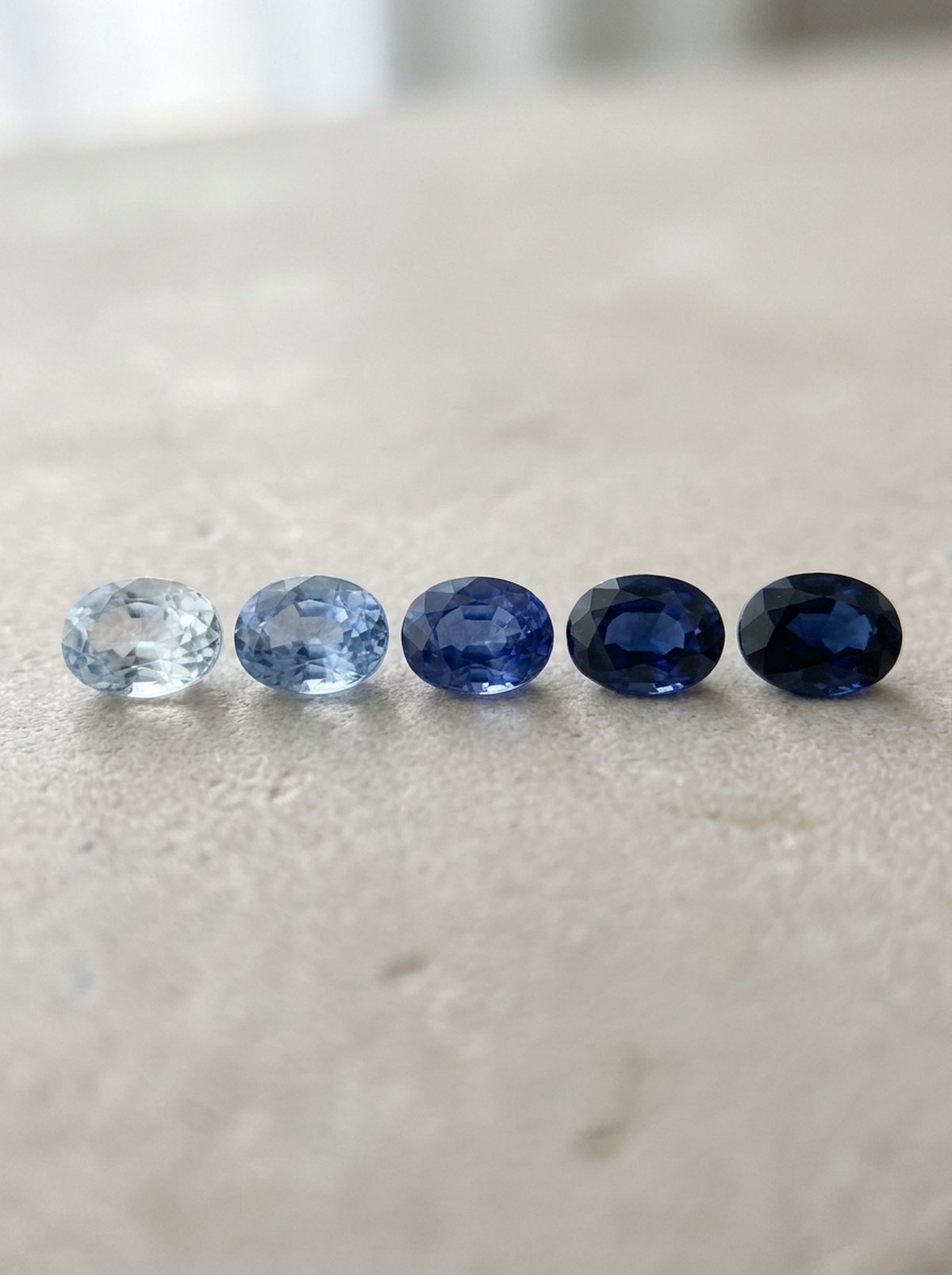
Tone is how light or dark the color is, on a scale from colorless to black. A stone that is too light looks washed out. One that is too dark looks black in ordinary light, which is a common fault in sapphires from some deposits. For most colored stones, the most valued tones are medium to medium-dark.
Saturation
Saturation is how strong or pure the color is. A highly saturated stone looks vivid. A stone with low saturation looks grayish if the color is cool, such as blue or green, and brownish if it is warm, such as red or orange. Higher saturation usually raises the price, as long as the tone is not too dark.
Light changes the color
The same stone looks different under different light. Warm light, such as incandescent bulbs and candles, has more red in it and flatters rubies. Daylight and cool white LEDs flatter sapphires and emeralds. A few stones, such as alexandrite and some sapphires, change color between daylight and warm light. The change can be slight or strong.
Dealers traditionally judge color in north daylight, which is steady and neutral. When you buy a stone you can't see in person, ask for a video in daylight and another under ordinary indoor light. Between them you will see how the stone looks most of the time.
Filed under Stones · August 14, 2026