Lab-grown or natural: what's different and what isn't
The chemistry is the same. The growth story, the clues inside the stone and the price are not.
Key points
- Lab-grown ruby has essentially the same chemistry, structure and hardness as natural ruby.
- Labs tell them apart mostly by inclusions, such as curved growth lines and bubbles in flame-fusion stones.
- A lab-grown ruby usually costs a small fraction of a natural one, and neither wears better.
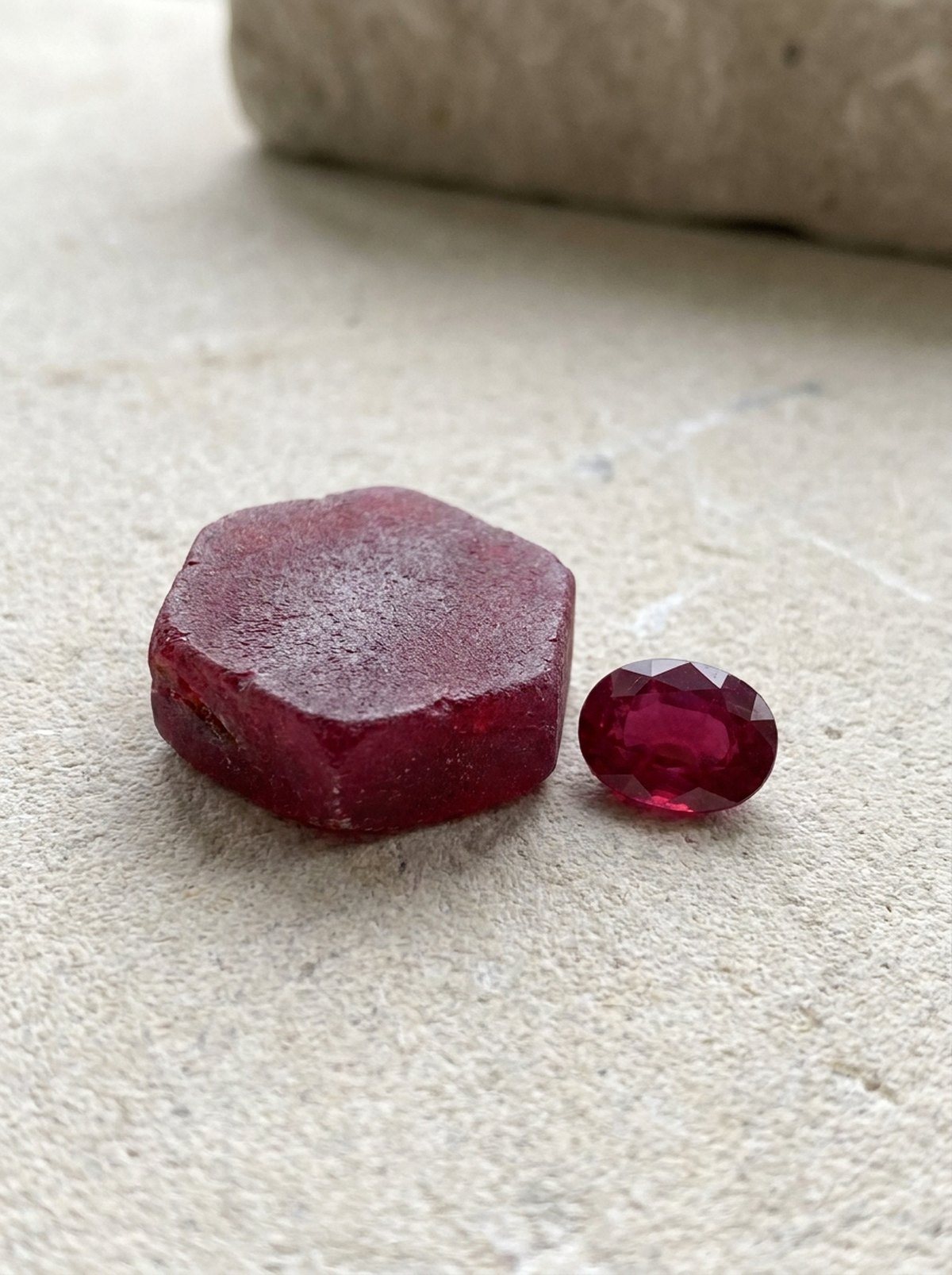
A lab-grown ruby is a ruby made in a lab. It has essentially the same chemical makeup, crystal structure, hardness and optical properties as one dug out of the ground. The same is broadly true of lab-grown sapphire, emerald and spinel, though lab emerald and spinel can differ slightly in refractive index and density, which helps labs identify them.
These are different from simulants such as glass or cubic zirconia, which only look like the real stone and have none of its properties.
The difference between lab-grown and natural is how and where the crystal grew, and that leaves marks.
How stones are grown
Labs use a few methods, and each one leaves its own traces.
Flame fusion drops aluminum oxide powder through a very hot flame onto a rotating rod, where it builds up a crystal in a few hours. It is the cheapest method and makes most lab-grown ruby and sapphire.
Flux growth dissolves the ingredients in a molten chemical bath and lets crystals form as it cools over months. The crystals look more like natural ones, and they cost more.
Hydrothermal growth copies the hot, pressurized water that grows many natural crystals. Lab emeralds are grown this way or by flux.
How a lab tells them apart
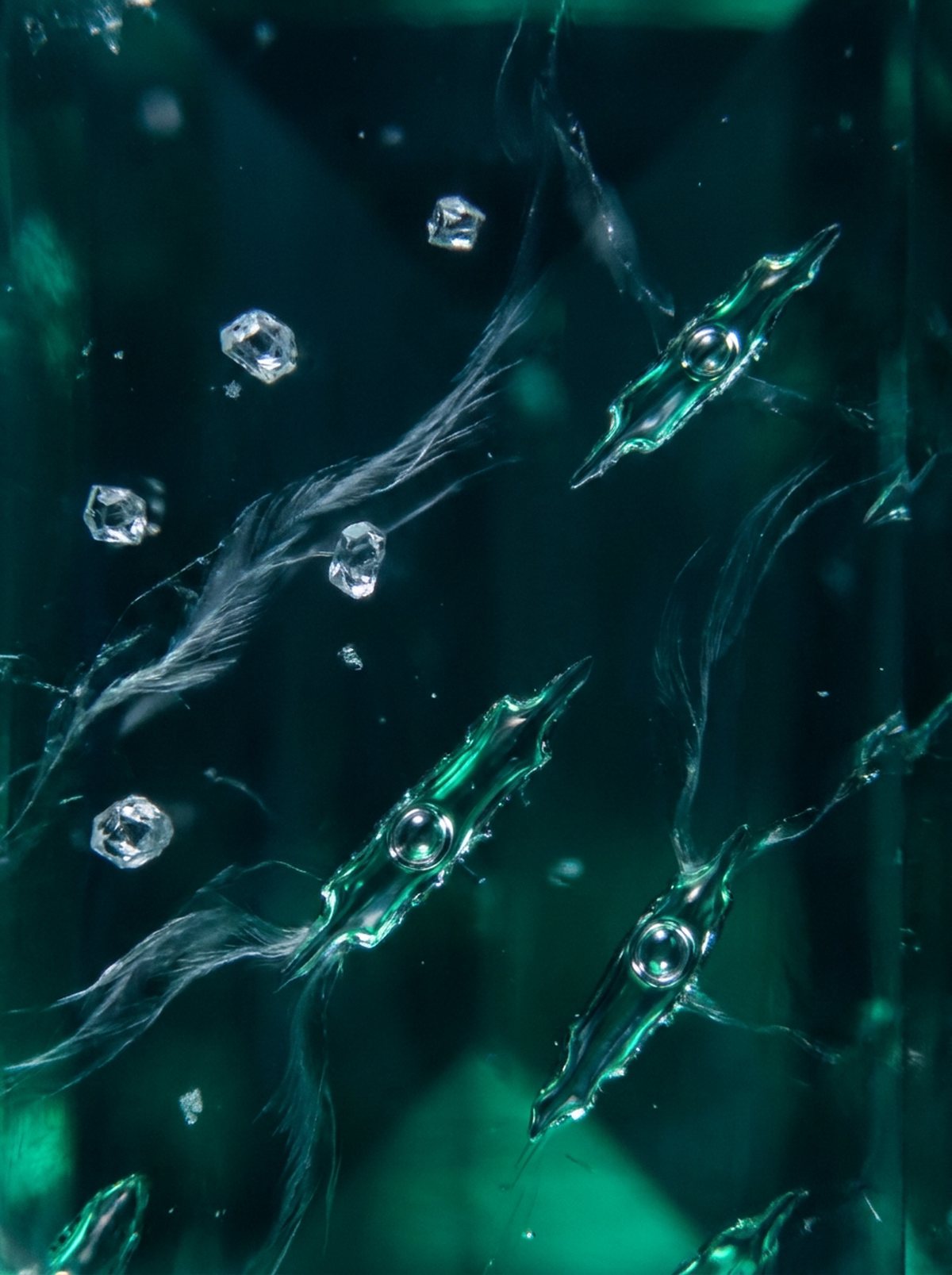
Most of the evidence is inside the stone, under a microscope.
- Flame-fusion stones often show curved growth lines and round gas bubbles.
- Flux-grown stones can hold wispy "fingerprints" of trapped flux and tiny metal flakes from the crucible.
- Natural stones show straight, angular growth bands and crystals of other minerals they grew around, such as the fine needles called silk in sapphire.
When the inclusions don't settle it, labs measure trace elements and how the stone absorbs light. A clean, high-quality stone may need that testing before anyone can say which kind it is.
Price
This is where the two are furthest apart. A lab-grown ruby usually costs a small fraction of a natural one of the same size and color, and fine natural stones go far higher. A natural stone's price reflects how rare that color and clarity are in the ground. A lab-grown stone's price mostly reflects growing and cutting costs.
Which to choose
Choose lab-grown if you want a large, clean, bright stone for the money, or if you prefer a stone that was not mined. Choose natural if it matters to you that the stone formed over millions of years and is one of a kind, or if you want a stone that can carry a lab's opinion of where it was mined. Neither one wears better than the other.
In the US, the Federal Trade Commission's Jewelry Guides require a lab-grown stone to be described as lab-grown, lab-created or synthetic. We name every stone as natural or lab-grown in writing and on the receipt, along with any treatment.
Filed under Stones · April 15, 2026