Why colored stones are sized in millimeters
A carat is a weight. Two stones of the same weight can look very different sizes.
Key points
- Emerald is less dense than ruby, so the same carat weight of emerald looks bigger.
- Settings are made in millimeters, and calibrated stones drop into settings made for them.
- Deep-cut stones carry hidden weight, so two stones of equal weight can face up at different sizes.
A carat is a unit of weight: 0.2 grams. It says how heavy a stone is, which only tells you its size if you also know what it is made of.
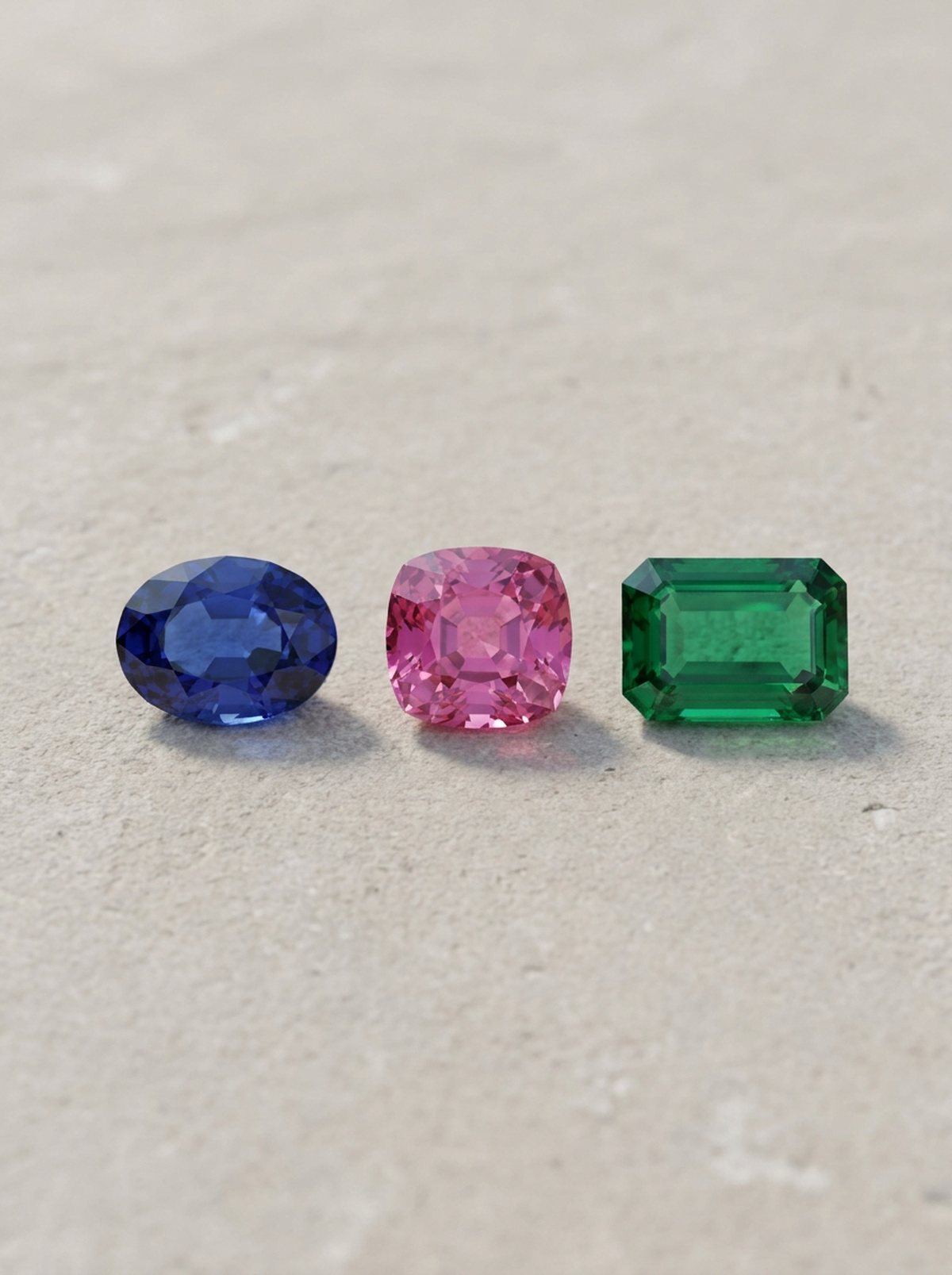
Gem minerals have different densities. Ruby and sapphire are about four times as heavy as the same volume of water. Emerald is about 2.7 times, spinel about 3.6, tourmaline about 3.1. So the same weight of emerald takes up roughly half as much room again as ruby.
The same outline, two weights
Our oval bezel pendant holds a 9 × 7 mm oval. Jewelers estimate an oval's weight from its length, width and depth with a rule of thumb:
length × width × depth × 0.0020 × density
For a 9 × 7 mm oval cut 4.5 mm deep:
- in ruby, the estimate is about 2.3 carats;
- in emerald, about 1.5 carats.
From above, the two stones look exactly the same size. If you shopped by carat weight, the emerald would seem the smaller stone, and a 2.3-carat emerald would look clearly bigger than the ruby.
Settings are made in millimeters
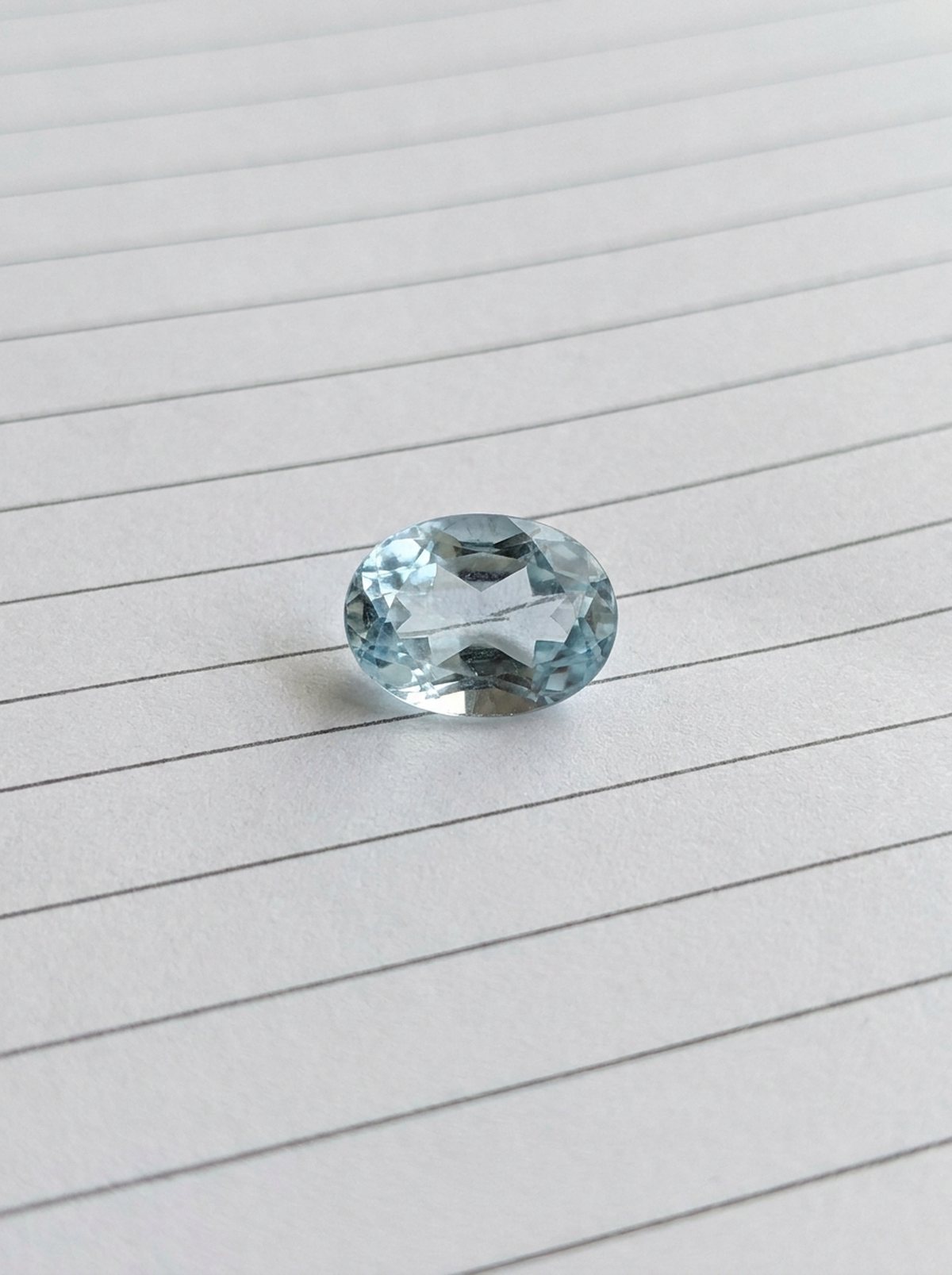
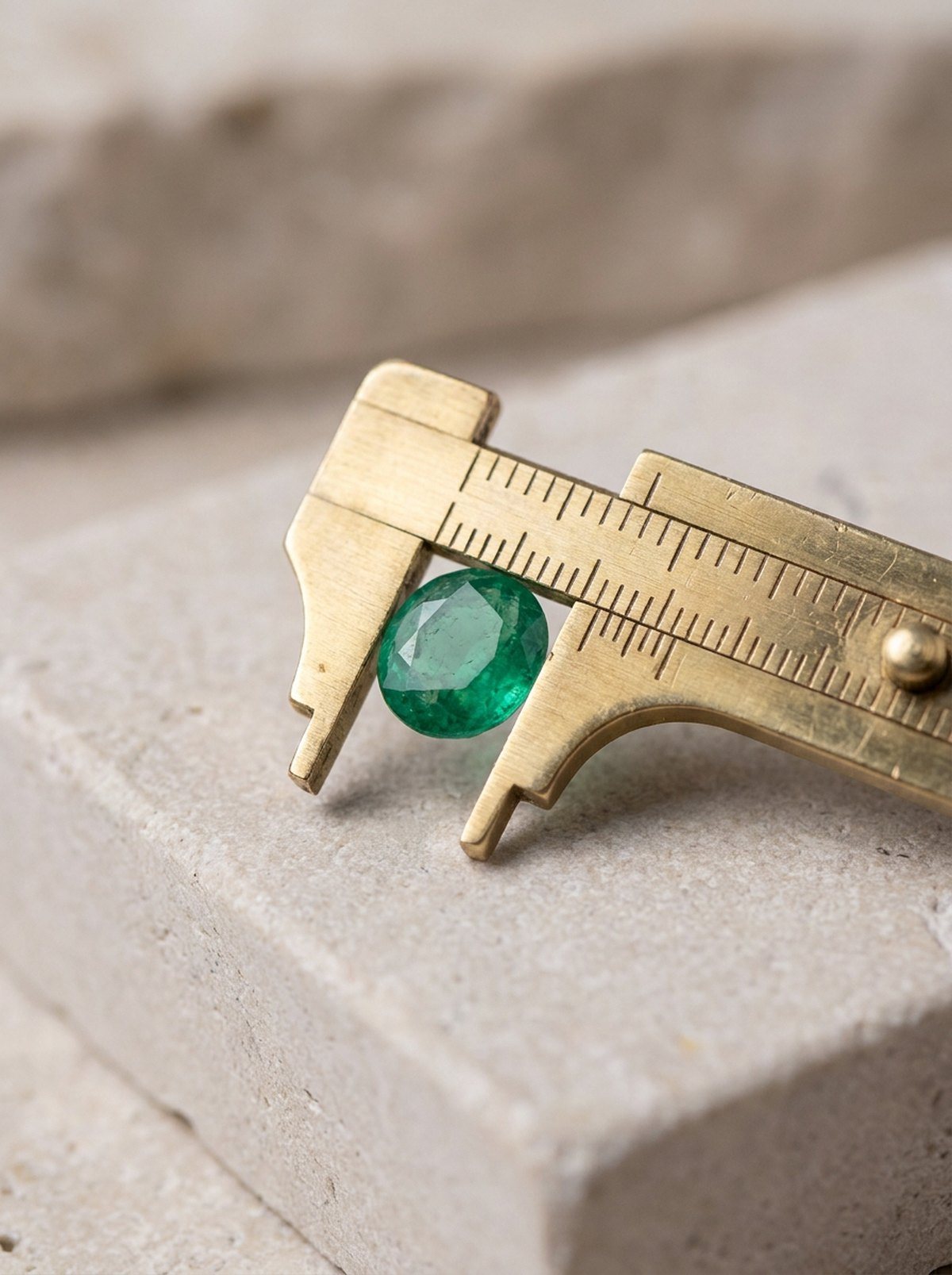
The other reason is practical. Claws, bezels and stone seats are made to fit measurements, not weights. Common oval sizes such as 7 × 5, 8 × 6 and 9 × 7 mm are called calibrated sizes, and stones cut to them drop into settings made for them.
A stone that is not calibrated can still be set, but the setting has to be made or adjusted around it. That is most of what happens when you bring us your own stone.
Heavy for its size
Rough colored stones are expensive, and they are often sold by weight. Cutters are paid to keep as much of it as they can. Many colored stones are cut with a deep, bulging lower half (the pavilion) that adds weight nobody sees from above. Two stones of the same weight can face up at quite different sizes, and the deep one may also look dark in the middle, an effect called extinction.
Measurements tell you what you will see when you wear it. That is why our designs give a stone's size in millimeters first and its carat weight second.
Filed under Cuts · April 24, 2026